When stuff turns up in your life uninvited we have a choice


Last week I was enjoying just being in the garden. Letting the skin tingle with the pleasure of the sun’s kisses and the eyes with the beauty of the flowers and plants.  Then I spotted a little creature moving about in my garden.  This creature was small and kind of shuffled along.

I find it interesting that my first thought was “What is this creature and what is it doing here in my garden?” followed immediately by an automatic emotional reaction along the lines of “It should not be here, I need to get rid of it!”  What thought came along with this emotional reaction?  “Let me frighten it away and if necessary kill it!” Why?  Simply because I have it that the garden belongs to me and anyone / anything that turns up there without my permission is not welcome and has to be got rid-off!

Wow, what a thought!  This thought, which I’d like to think is not me,  got my attention and stopped me in my tracks.   Given that I have been involved in ‘gratefulness meditation’ a higher self kicked in and I chose to just be with this creature.  To be grateful that it was in my garden.  And to get to know this creature better. At some fundamental level I also got that we both belonged in that garden along with every other plant and creature that was there.  If you zoom out and look at the planet Earth you can totally and logically get that all that is here belongs here!

When I did that I realised that this creature is simply a baby hedgehog.  And I got curious and just watched it.  This hedgehog did not appear to be sensitive to noise.  He moved slowly – shuffling along the floow.  And he made for the areas of the garden that was covered with lush green plants full of soft leaves.  When he got there he hid or became hidden under the leaves.  All I could hear was the sound of shuffling and munching! He entertained me for at least ten minutes.  And now I look forward to the day that I will see this chap again.  He has enriched my garden and my life.  He has also taught me a valuable life lesson.

So what do I take away from this experience?

‘Stuff’ turns up in our lives and frankly we do not have as much of a say about it as we pretend we do.  When this stuff turns up in my life, your live, each of us has a choice as to how we are going to be about it.  Rather like I did with the hedgehog.   You and I can choose to get rid of that intrusion or we can embrace what has turned up.

If we do not embrace what turns up despite the fact that it is right there then we are creating our own suffering: we are arguing with reality and reality does not respect our needs and wishes.  This is what the Buddhist say that there is pain in living yet suffering is entirely optional.  We suffer when we argue with reality rather than work with reality.  Zen has a visual for this picture:  the tree that survives a strong wind is the one that is young and simply bends with the wind, the tree that is blown away is the older tree that has forgotten how to bend!

If on the other hand we embrace what turns up then you and I can learn what there is to learn, do what there is to do and most importantly be what the circumstances call us to be.  Sometimes the only choice we have is how we choose to be in light of what is so.  I believe that Viktor Frankl called this the ultimate freedom in his book Man in Search of Meaning.  Frankl should know given that he is a survivor of the WWII concentration camps.
 

Fighting and killing over labels and how to give it up


The situation – we fight and kill over labels

The other day my wife and I ended up in a conversation talking about poverty.  Whilst the conversation started well it quickly ended up with each of us arguing/disputing against the other.  And quickly after that emotions became inflamed and our relationship a distant one for the rest of the evening.  What happened?

When I got thinking about it – during the night – I ended up laughing at the human condition, my condition.  My wife and I had ruined a perfectly good relationship where we felt connected to each other and were being respectful to each other simply over a label ‘poverty’.  What do I mean?  We ended up fighting because I said ” X is poor” and she replied “X is not poor”.  To which I replied that she did not understand poverty as she had not experienced it.  And as such she was wrong and that “X is poor!”  To which she replied that I was mistaken…..

So my wife and I ended up fighting over a label.  How stupid!  How human!  How often do I end up arguing with others over labels?  How often do you end up arguing with people over labels?  And what do we get out of it?  We argue, we raise our voices, we throw verbal assaults, we hit each other and ultimately we kill – all over labels!

When my children were young (less than eight years old) I would play a game with them.  They would make the statement along the lines of “X is good” or “Y is stupid” and I would offer them £1000 if they could show me good and stupid.  And of course they would show me X or Y.  In turn I would point out that they had shown me X and Y – not good or stupid.  Yet here I am 40+ years old falling into that trap myself all the time!

Which are our favourite labels?  They include: good, bad, right, wrong, true, false, me, you, us and them.  If you take a good look these labels and the cognitive and cultural structures that give rise to them are deeply embedded in our way of thinking and acting.  The bizarre thing is that these labels are all made up!  And I should know better than most people having grown up in two very different cultures.

How to give up fighting over labels

The other day one of the family members simply said somethign to the effect “You are critical / wrong / bad”.  Normally, I would tend to respond along the lines of “No, I am not!”  This time I simply said “Yes, I am critical / wrong / bad.” Guess what happened – nothing. The conversation came to an abrupt and peaceful end.  There was nothing for us to work on – to structure to continue the conversation and argue.

How did I end up there?  I simply got that when you make the statement “Maz you are bad” you are not describing reality.  No, you are giving me access to how I land for you in your world.  So your statement gives me access to the reality of your mind.  And who is the expert on your mind?  You are!  So if you say that “Maz you are bad” then I can simply say “Yes, you are correct.” because you are – in the way that that the world occurs to you.

Key insight: all statements are ultimately about how I see the world and not the world itself

The key takeaway is that most of us most of the time are not making statements about the world.  No. We are simply describing our world and how things land for us.  If we can get that then we can give up fighting and killing over labels.

Everything is a reflection of self, everything is mind


In April, I throughly enjoyed each and every day.  In April I was carefree, lighthearted, relaxed and totally in the present. And so I was present to the sunshine, the warmth, the grass and the plants blossoming into flower.  Every day was a joy.

Then yesterday I started thinking about stuff and ended up in the land of fear, uncertainty, doubt, concern and worry.  The day was equally beautiful and yet I did not experience the beauty.

Today, I was in a much better mood and really appreciated my day.  I sat in my garden and enjoyed the sunshine.  I walked around, looked at and marvelled at the flowers: blue, purple, white, yellow, orange, red…..Then in the afternoon I got some news that I did not welcome into my life.  And almost immediately I fell out of love with this day even though the sunshine was still there and the flowers were just as beautiful.

In the midst of all this I got present to a truth that was presented at Landmark Education:  the future you are living into gives you your being in the present.  And I got present to the Zen saying that ‘everything is mind’!

On significance and how it robs us of lightness, freedom and self-expression


We all want to be signficant – to be someone rather than anyone, to be looked up to rather than looked down on.  And most of us spend our lives striving for significance and in the process we carry a heavy burden – all the time.  The cost of this is huge.  Significance robs us of a lightness in being and the freedom to simply be and do as we wish without worry about how we will be viewed by others.  significance also robs us of the natural way that we learn – by doing, by messing up, by doing again differently, by messing up until we final achieve competence and mastery.

I noticed this in myself recently;  significance is a huge thing for me underneath the surface.  How did I get present to it?  Recently, I have been helping my son to post the local newspaper and this has meant me walking house to house and pushing this newspaper through letter boxes.  First, time I did this I felt uneasy.  Second time I did this I felt uneasy.  And today I did it for the third time and noticed that I was secretly pleased that most of the houses were empty.  Why?  Because I did not want people to see me doing what I was doing: shoving newspapers through doors.  And why did that matter?  Because I had made a story about it: it is a low status activity done by low status people and so forth.

Interestingly, when I saw this I was able to give it up.  When I gave it up I was able to take my time rather than rush and by taking my time I enjoyed the experience.  I actually enjoyed being outside in the sunshine.  I enjoyed looking at the plant and especially the flowers in the different gardens.

I wonder in how many other ways I am being signficant or driven to be significant and so have a loss of freedom, of lightness, of playfulness and simply being fully expressed?  How about you?  Where does this show up for you?  And is the bargain that we have made and continue to make worth it?

Personally, I am up for trading in significance for freedom of being and self-expression.  And there is a long road ahead: addiction, especially when it is so subtle, can be difficult to give up.

The world is only as wondrous as I am open to see the wonder of it


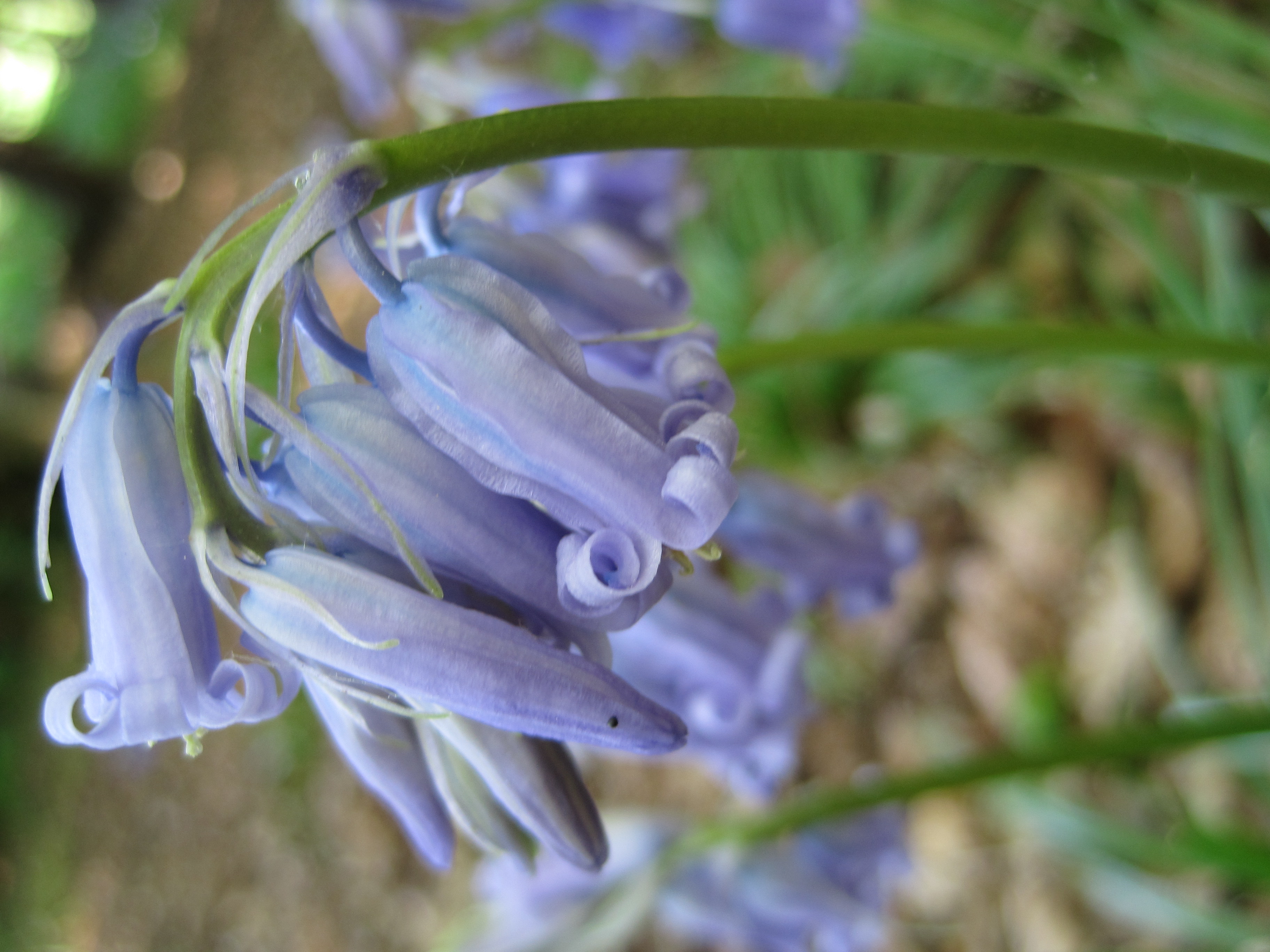
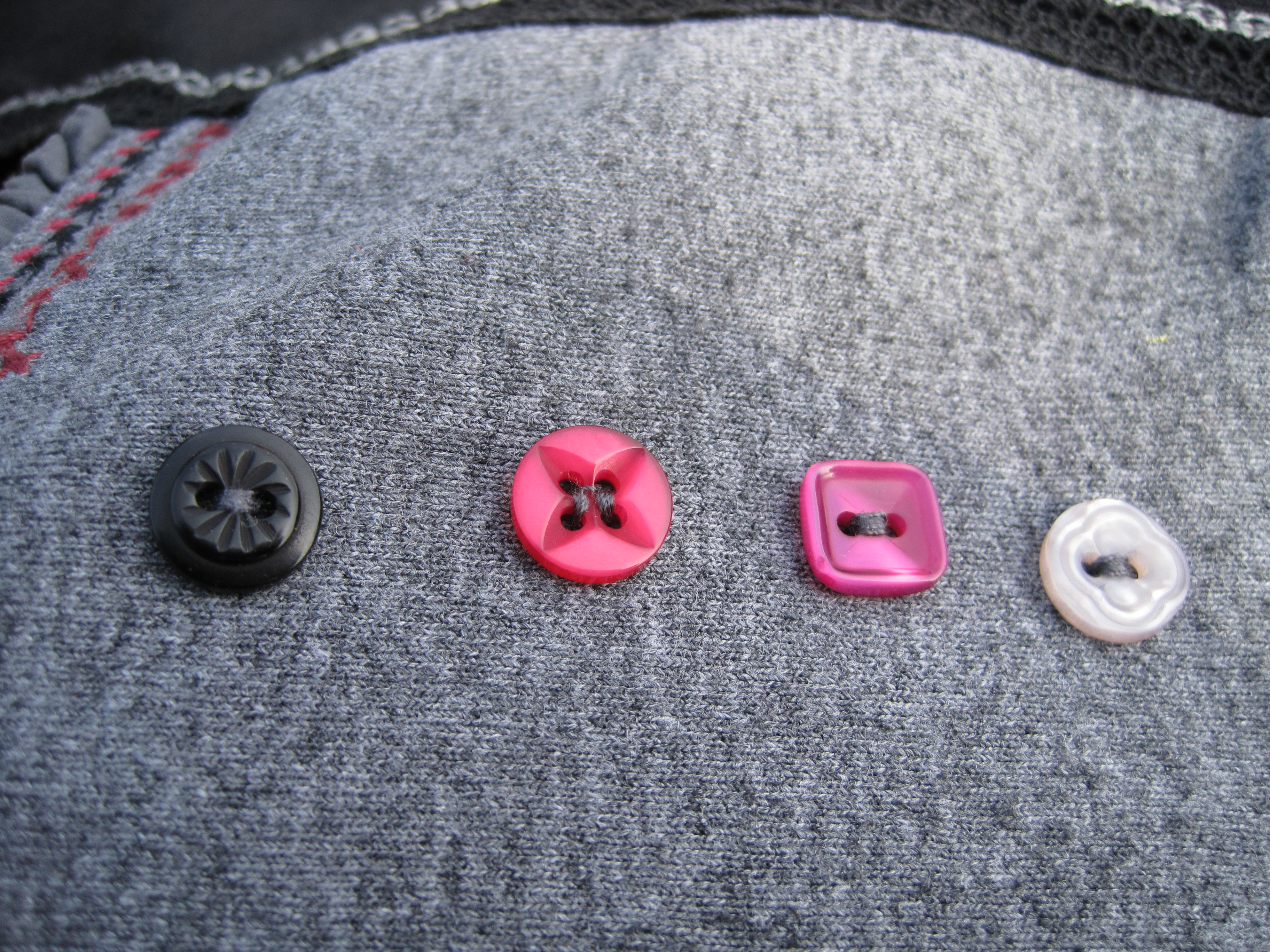
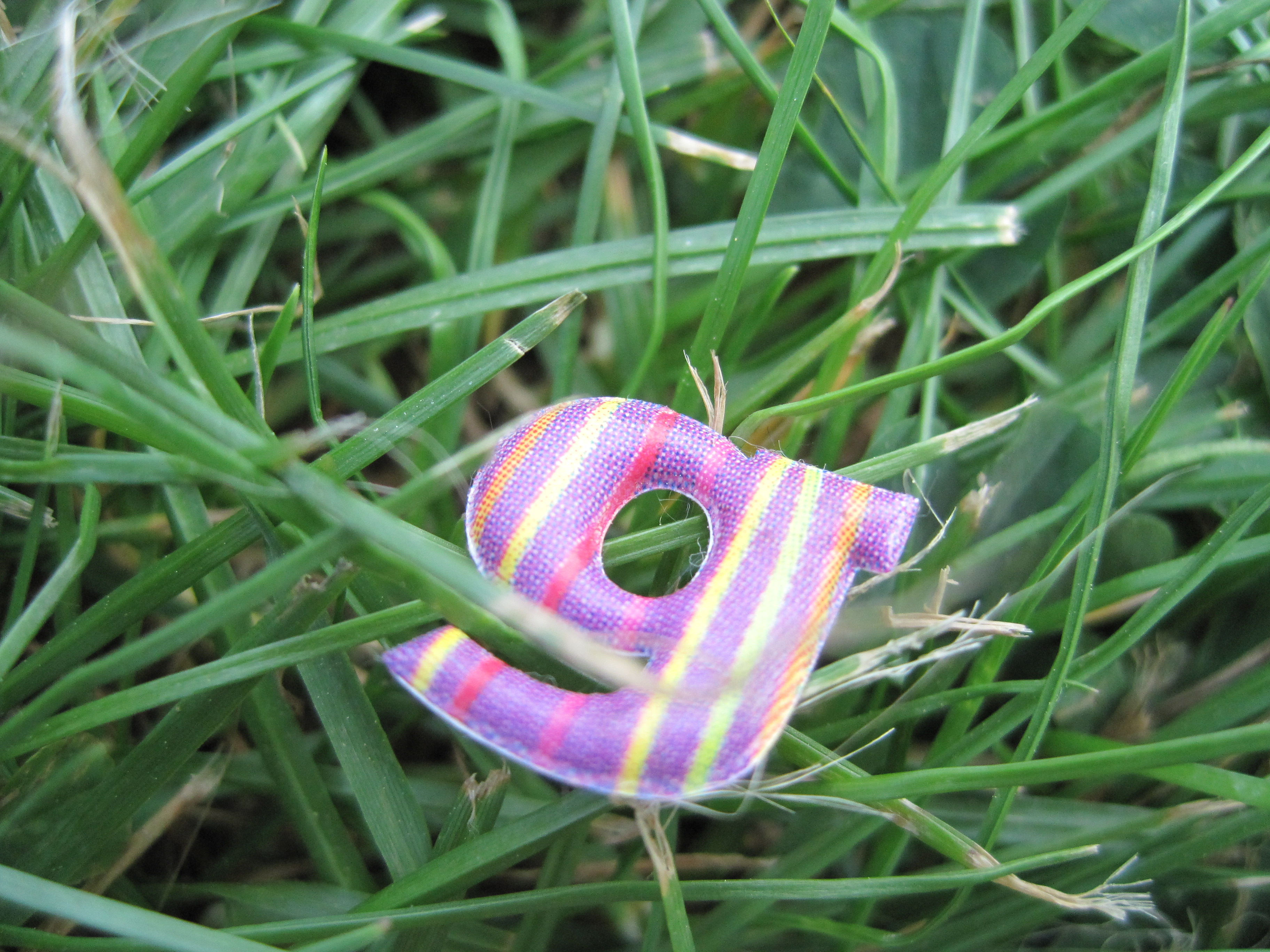
Yesterday, as a family, we went to visit Greys Court for the afternoon.  In total there were five of us and I am confident that each of us experienced the ‘place’ according to ourselves.  Put differently, each of us experienced ourselves.    This became obvious to me as soon as I gave Clea (who is ten years old) a camera and she dived into the world around her. Here are some examples:

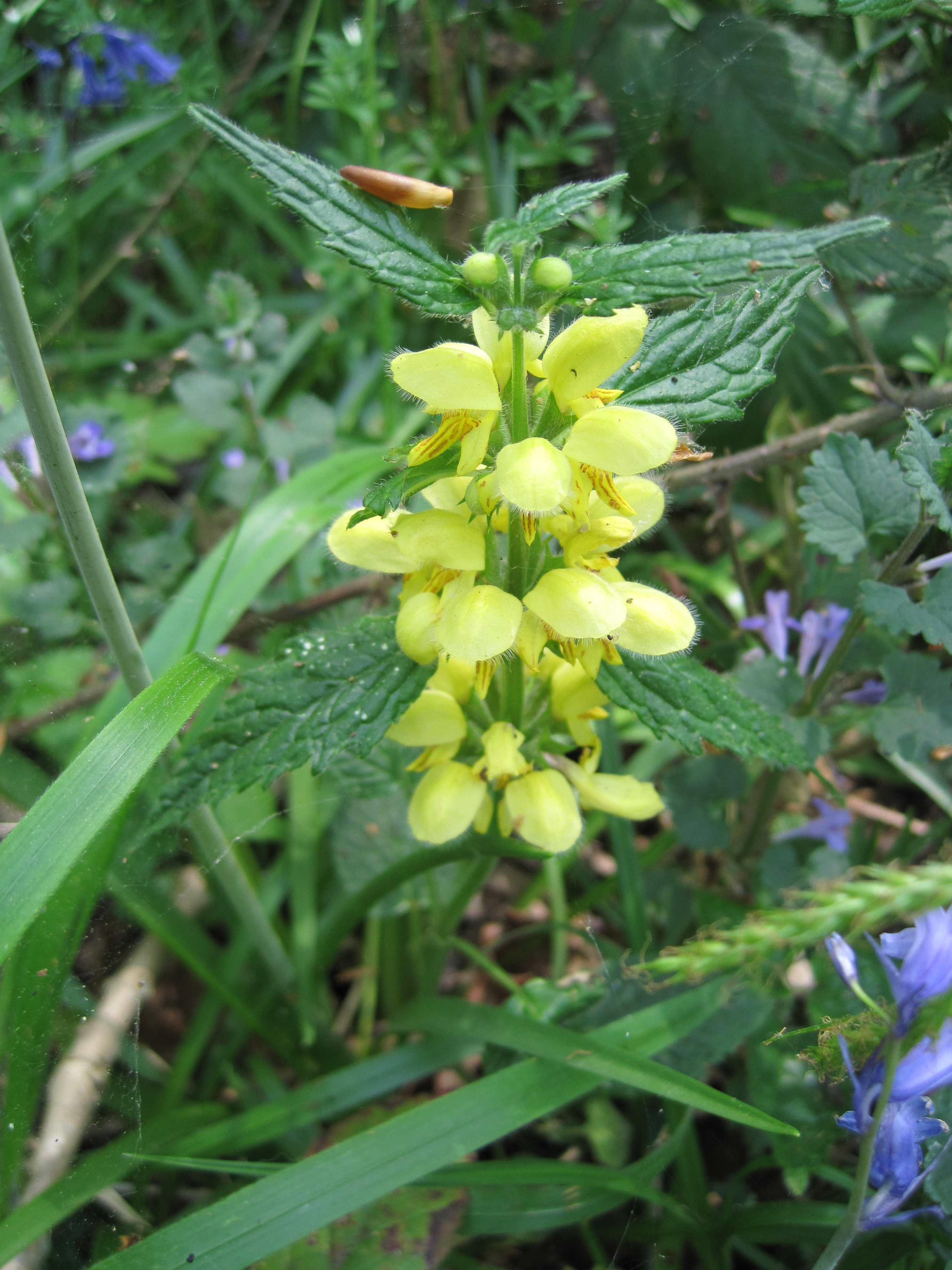
a. Where I saw a weed Clea saw a beautiful flower:

b.  Where I saw tiny dying (insignificant) Bluebells Clea marvelled at the wonder of these Bluebells

c.  Where I saw nothing Clea saw beauty everywhere – in a T-shirt, in a set of buttons on her mothers top, in the grass:

Lessons Learnt

My already existing, always, way of being is not open to wonder.  It simply is not.  And so I miss the beauty, the wonder, of what is present around me in the simplest things.  If I approached the world, from the context, that my daughter approaches it then I would experience the beauty of the world that she experiences.  I am totally up for that.

I need to start somewhere so I will become an ‘Apprentice in Wonder’ to my Clea by looking at the world through her eyes.  That means giving her a camera so that she can capture what she sees and share that with me.  It also means being open to the new.

I have started a (daily) gratitude journal to enable me to capture one aspect of the wonder/beauty of this world that I simply miss because I do not look for it / am not present to it as I take it for granted.  You can find it here:   http://icanbegratefulfor.wordpress.com/

Beyond ‘looking good’ and avoiding ‘looking bad’: embracing the ‘dark side’


As human beings we are not individuals.  This probably occurs as shocking and offensive statement to many brought up in the USA and the UK.  For people brought up in other cultures like say Japan and even the Mediterranean countries like Spain, Portugal, Italy and Greece this statement is rather obvious.

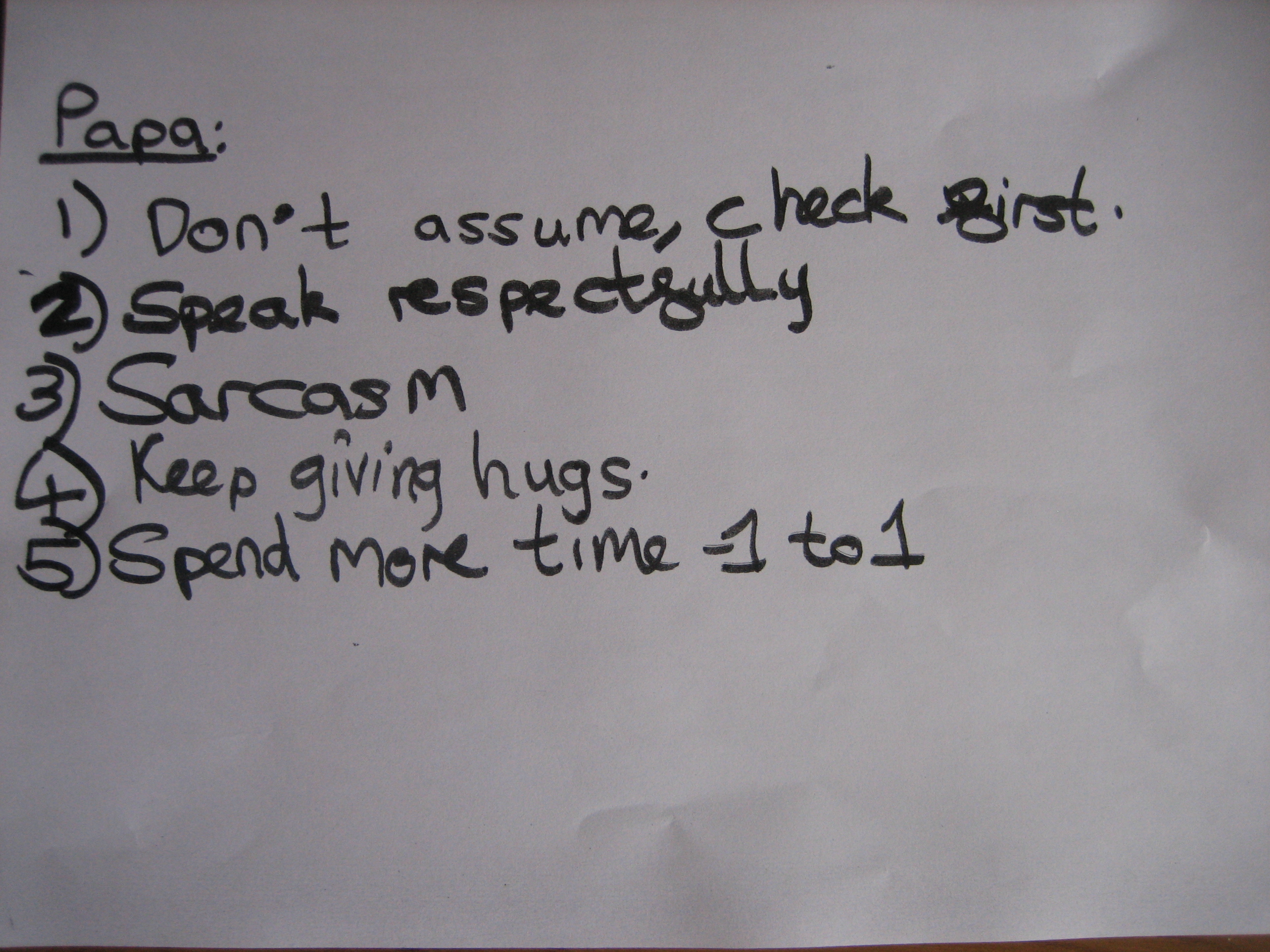
In a nutshell each of us is living in, totally immersed, in a social content and as such we strive to ‘look good’ and avoid ‘looking bad’ in this particular context.  That goes for me too!  So whilst I want to be a wonderful (enlightened, considerate, generous, compassionate, kind) human being, it can be argued that I fail more than I succeed.  This was brought home to me recently when I received the following gift from my son:

PapaNow I can take that many ways.  I have chosen to see this as gift in two senses.  First, it bursts the bubble (I or anyone else may have about me) and thus encourages humility in me.  Second, it shows me the work that there is for me to do.  Specifically:

  • To check and not assume especially when things are difficult or not as I wish them to be;
  • To speak respectfully – at all times, under all circumstances, to all fellow human beings;
  • To avoid sarcasm – which is another way of saying ‘to treat my fellow human beings’ respectfully;
  • To keep giving hugs – which I love to do’ and
  • To spend more 1 to 1 time with my family members.

We all have a dark side. And it loses its hold over us if we accept that is the case, embrace it and work with it.  So I am going to give that a go.

On being wrong or giving up your point of view


I had, in my opinion, a difficult upbringing.  What got me through it was the conviction that my parents (their beliefs, their culture, their practices) were narrow minded and plain wrong.  And that I was right: more open minded, more tolerant, more widely read etc.

Since that time I have made a life out of being right.  I have read on philosophy, psychology, sociology, neuroscience, history, politics, religion etc.  I have spent three months or so reading a whole collection of works to get to grips with Islam (the religion) so that I could prove my parents to be ignorant and wrong.  And of course I did and it felt great.  Yet, it did not help me to build a bond of mutual respect and affection.

It is interesting, for me, to realise that I ended up in consulting.  What are consultants great at?  Being right: we know what you should do, how you should do it, when you should do it, the right process and tools to use.  Put differently, I have made a living out of being right.  And so it is no surprise that the action that I find the hardest is to “give up my point of view” and accept that my point of view is one amongst many, many points of view: specifically that I am too simple to comprehend the complexity and dynamic nature of life.

Then I came across the following TED talk, which I encourage you to watch and listen to:  On being wrong.   Here are some key quotes:

  • Kathryn Schulz: “This attachment to our own rightness keeps us from preventing mistakes when we absolutely need to, and causes us to treat each other terribly.”
  • St. Augustine: “I err therefore I am.”
  • Buddha = Schulz + Augustine: “Ignorance is the root cause of the cycle of existence and suffering.”

If you have not already done so then I urge you to watch the following TED video on empathy: A radical experiment in empathy”.  I recommend that you first watch “On being wrong” and then watch “A radical experiment on empathy”.  Put differently, if I can accept that I may be wrong then it helps me to get the other – to empathise.

I thank my friend Arie for extracting the following from the TED empathy video:

“Step outside of your tiny little world.

Step inside of the tiny little world of somebody else.

And then do it again, and do it again, and do it again.

And suddently all of these tiny little worlds they come together in this complex web.

And they build a big complex world.

And suddenly without realizing it

you’re seeing the world differently.

Everything has changed.”
To sum it all up

Accepting and standing in the circle that “I could be wrong here, how I perceive and think about stuff is only one way of doing so” is the access to not only wisdom but also to empathy and through that to better relationships, more love and joy in our lives and finally a better world.   Then again, I may have got it totally wrong!


How one simple practice can help build strong relationships


I have been married to the same woman for over 15 years and we have known each other for longer than that.  Over that time we have gone through the roller-coaster of relationship many times: spring, summer, autumn and winter.  There have been times when we have created and bathed in a delightful relationship.  There have been times when the relationship has been simply ok.  And there have been times when it has been so painful that I have wondered how I got myself into the relationship and into that position.

Recently, I have noticed that my relationship, my relating, with my wife has gone up dramatically.  And all because we have incorporated a practice into our lives.  Because it works so well I want to share that with you.   Here is how this practice works:

  • Twice a week, every week, we spend time together and talk about our experience of our relationship.  What is working, what is not working, what can be improved.
  • We are clear that the purpose of these sessions is to build the relationship and not to simply vent. And so any sharing has to be mindful.  Yes, I can share what my wife did (Teh behaviour that occurred), how it landed for me and how it has left me feeling.  No, I do not give myself permission (nor does my wife) to  label, criticise or condemn her.  Why?
  • Because we have agreed that we will listen to each other as persons of worth – each of us being up for building a loving relationship and going about it as best as we can.  And so any behaviour that does not contribute to that is open for discussion but not the worth, the dignity, the motivation of the other.
  • We start by checking in and compliments.  Checking in is simply getting present to where you are at in the relationship. Specifically, are there any issues, grudges, resentment, anger that stands between me and my wife.  Once I have shared this then I get present to what specifically my wife has done that has made my life easier, better or simply enjoyable.  Then I share that with my wife and thank her.   Then she does the same.
  • Next, we take turns to share whatever stands between us – the irritations, the disappointments, the upset, the grudges, the frustrations etc.  And we do that using non-violent language.  In the process, I may find that I have done something that has landed badly for my wife and I had simply been unaware of it.  For example, I may have made a casual remark that hurt my wife’s feelings.  When that happens I tend to be genuinely remorseful and apologise.  That tends to be enough for my wife because she gets that it is genuine.  On the other hand it may be that I am asked to do something that my wife needs me to do.  Or to stop doing something.  We discuss, we understand, we make requests, we come to an agreement.
  • During our talk, our sharing, we have agreed to focus on specific events and behaviour that happened between the last time we talked and this time.  That means that we tend to be talking about stuff that happened in the last three days.  I find that really works for me because I am dealing with specific behaviour rather than generalities and grudges that were born, weeks, months, years ago and have not yet been killed off.

Do each and everyone of these sessions go smoothly?  No.  We have worked out that it is better to rearrange if you are feeling down or simply juggling with so much stuff that you are not in the state of mind to be the kind of person you need to be to honour these sessions and make them work as intended.  Have these sessions helped us to understand each other, to empathise?  Yes.  Have these sessions helped more love enter into our lives?  Absolutely.  Do we listen to each other differently every day?  Yes and that makes all the difference.  It is amazing what can grow when you listen to each other as persons of worth up for and playing the game of lets build a great relationship, a great life.

Here is a link to an interesting talk on TED.  It is all about walking in the shoes of the other and how that builds understanding.  I suspect that is what we are doing through these sessions.

Why we all love our friend Shaky


This weekend our friend Shaky popped in and lit all of us up and our home like beautifully laid out lights on a Christmas tree!

Each of my three children love spending time in Shaky’s company.  My wife loves spending time in Shaky’s company.  And I love spending time in Shaky’s company.

What is Shaky’s secret?  Does he have a bag of tricks and techniques?  Has he been to charm school?  Perhaps he has read the latest books on how to build great relationships? The answer is much simpler.

Shaky loves people and he makes you feel special.  How does he do that?

  • When Shaky is with you he focusses on you and does what you want to do, talks about what you want to talk about;
  • Shaky accepts you just as you are and as you are not – no judgement, no evaluation, no criticism, must plain acceptance and validation;
  • Shaky is gentle – he speaks gently, he moves gently;
  • Shaky will enter into a conversation with you and share is point of view yet he will never argue, criticise or condemn your point of view;
  • Shaky never looks towards your wallet – he is always the first one to take is wallet out and pay and we have to fight to pay;
  • Shaky never complains – never complains; and
  • Shaky always offers a helping hand – he never acts like a guest, always like a family member.

We love you Shaky.  We are sad to see you leave our home today.  And we are looking forward to being in your company again.

Finally: I thank you for the gift that you gave me this weekend.  The gift of your friendship and the gift of helping me to better understand myself – and be a better human being.  I look forward to seeing you soon.

I am making progress and there is still much to do


Yesterday evening I celebrated my birthday with wife and children by sharing a meal, talking and generally enjoying being together.  Being fortunate, I simply do not need stuff so my request is simply for family members to write a personal card and give it to me.

This year not all the family members ‘got their act together’ and provided those cards (3 did, 1 did not) so I asked them to point out my positive qualities – what they like about me.  This is what I heard:

Wife:

  • “You are caring”
  • “You can be funny”
  • “You are straight  with people”
  • “When you realise you have made a mistake, you admit it and apologise”

Daughter:

  • “Loving”
  • “Good at helping me deal with problems – you help me make sense of my problems, you provide good suggestions”
  • “Willing to give lots of hugs and ticklish; you give me lots of attention; you tell me stories and explain the life lessons; you lend me your clothes”
  • “Always up for going for a walk to the park with me”
  • “Always call us when you are away from us due to work”
  • “You can be funny”
  • “You give me hugs in the evening”

Youngest Son:

  • “Loving – emotionally open and expressive unlike many dads: you give me hugs”
  • “You stand up for me and with me; you trust me”
  • “I love your driving – you make it fun”
  • “Your dancing”
  • “You make the most of your life; I enjoy our walks together”
  • “Streaks of wisdom etched on your face as a result of your hard work”

Oldest Son:

  • “No bullshit – you are straight talking”
  • “Hard for things to get by you – you are on the ball”
  • “Loving, affectionate”
  • “Over protective – good and bad”
  • “Soft hearted – you have a really warm heart”

I enjoyed listening to this and being reminded of what (about my behaviour) matters to and makes a positive contribution to my family.  Then I asked for the negative qualities – what about me causes them pain, problems or my behaviour they simply dislike.  This is what I heard:

Wife:

  • “Impatient”
  • “Defensive, can become critical and talk down to people”
  • “Like to be right – don’t like being questioned”

Daughter:

  • “Overprotective – sometimes and rarely”
  • “Soft hearted – you will not say no even when it hurts you to do stuff we are asking for you”

Youngest Son:

  • “Impatient”
  • “When I hurt myself you tend to be critical (serves you right you should have been paying attention) rather than sympathetic”
  • “Sometime you cut me off – don’t allow me to say what I want to say  – making me feel that you treat me like an animal”

Oldest Son:

  • “You run away from problems and conversations that you find difficult (family conflicts) – you never really sort them out”
  • “Over protective: you rush downstairs when you hear us shouting – you assume we are fighting!”

What I take away from this

A little while ago, perhaps at the beginning of this blog, I wrote: “On violence in day to day living” .  Well, it looks like I really have not made that much progress on taming my violence towards my family.  Now I have a choice: I can feel bad about myself; I can give up; I can be with what is and simply accept it; or I can use what I have learned to re-commit to being a peaceful person and incorporate practices into my daily living to help me with that.

After careful consideration I choose to live in the possibility of being a peaceful, calm, person no matter what the circumstances.  And this possibility inspires me and puts a smile on my face –  that lets me know that I have chosen the right path.

A final word

Aldine, Rohan, Marco and Clea – I thank each of you for being a part of my life.  I thank you for sharing yourselves with me on my birthday.  I thank you for being honest with me.  I thank you for loving me and believing in me.  All these things make a HUGE difference to me.  Please know that I love each of you deeply – even if that is in my own imperfect way.

An insight into myself: I prefer ‘I-Thou’ and feel uncomfortable with ‘I-It’


There are often times that I have struggled to live and feel comfortable in England where I have spent most of my life and the country that is home.  Having had the fortune to travel, I have noticed that I have felt more comfortable in other countries such as Spain, Italy, Portugal, France and even Pakistan.  Why?

To use Martin Buber’s insight, I believe that I am more inclined toward the ‘I-Thou’ orientation rather than the ‘I-It’ orientation.  What does that mean in plain English?  It means that I am most comfortable treating my fellow human beings as fellow human beings in themselves. And not as objects or roles.  It means I welcome the warmth and hospitality that I experienced in Spain, Italy, Portugal……  It means that I struggle when human beings are described and treated as resources.  It means that I feel most comfortable when I look up and treat the waiter or waitress who is serving my food as a human being rather than an object – a person fulfilling a role.

Perhaps it is not the English culture or society.  Perhaps, it is just that I have spent so much time in corporate business where human beings are simply objects fulfilling roles and/or executing tasks.  It is telling that, at best, they are defined as Human Resources – resources that simply come in a human shape.  That has never sat well with me.

I remember the first time I noticed this, I must have been between 16 – 18 – the age when I started going to discos.  I assume that I was as hormone charged and attracted to the young women there as my friends.  Yet, I did notice a difference.  My friends saw and talked about the young women there as objects and commented on them as such.  And of course their aim was conquest.  I remember thinking that they were talking about human beings as objects – as lumps of meat.  And it did not sit well with me.  What I saw, right in front of me, were human beings: someone’s daughter, someone’s sister.   Whilst this may sound daft, I considered how I would feel if these friends of mine were talking that way about my sister – even though I did not have a sister at the time.

So maybe that is why I was touched so deeply when my son wrote “I love you, Papa” on the computer screen and left it for me to see before I went to sleep; earlier in the evening I had spent some time in helping him with what he enjoys doing – trading via eBay.  He had asked me for help, I provided it.  He asked me for my credit card and I provided it – I simply trust him to use it wisely and he does.

Perhaps, it is because I value my fellow human beings that today on my birthday I am thinking of friends, clients, colleagues old and new.  John, Natalie, Kate, Ray, Dan, Laura, Wil, Hailey, Ruth, Thakor, Manoj, Dawood, Phil, Pooja, Justin, Lina, Chas, James, Catherine, Rosemary, David, Kevin, Mel, Ansar, Fred, Simon, Derek, June, Hugues, Suzanne, Ralf, Meme, Joyce, Michel, Gayton, Jean-Claude, Dave, Tim, Gisella, James, Aldine and on and on.  Who has not touched my life?  I thank each and every person who contributes to my life.  Thank you, the world is a richer place for your existence.

This morning when I woke up my daughter danced into the room to wish me a happy birthday.  And I asked her what three things she liked about her daddy, that made him special to her.  This was her reply:

  • Kind and loving
  • Peaceful
  • Always there so I see lots of him
  • Enjoys spending time with me

That made my day.  And then I got to the computer and found messages from  friends near and far. I thank each of you, send you a big hug and look forward to when I will see you again and give/receive a hug.

Health is everything: it is the ultimate wealth and most of us are simply oblivious to it!


For most of my life I have taken my health for granted.  I simply assumed that everything would work and work fine till the end of days despite the fact that my father has suffered two strokes and is partly paralysed and cannot take care of himself.  I rested in this assumption simply because I have been eating the right foods and in moderation.

Recently I have been caught completely by surprise.  First there was the shock of learning that I have to take a thyroid replacement every day because my thyroid gland is under-active.  Then there was the shock of learning that all my good eating had been to no avail.  Despite being vegetarian and staying away from fatty foods I find that I am genetically predisposed to a high cholesterol level.  Apparently the liver is responsible for some 80% of the cholesterol.  And now I find myself on statins.

Then back in June 2009 I found that my neck was in considerable pain and once all the pills had been taken, the physiotherapy tried and the MRI scan I found that I had a prolapsed disc in my neck and frankly there is nothing that can be done about it that does not risk me being paralysed if things go wrong.  After nine months I had made all the life changes to deal with that so that I lessen the chance of aggravating my neck.

Funny though it may sound, I can cope with that.  How do you cope with the fact that your lower back can seize up such that you cannot even sit?  That is the situation I find myself in: if I sit for more than half an hour I end up experience intense pain and cannot even lift my legs to put my socks on.  What do you do when you cannot sit?  When you can only walk very slowly or simply lie down?  What do you do when you have such an active and curious mind like mine – one that loves to learn?  What do you do when you cannot write – something you have wanted to do for such a long time, have started finally and now enjoy doing it?

I do not have the answers.  I know that is the situation that I find myself in and I am doing my best to live with it.  Sometimes that is simply the situation that you find yourself in and there are no magical answers.  You just have to do the best that you can do.  And still be grateful that things are not worse.  I am grateful that my friends, my family, my loved ones, my home, my business, my community, my neighbourhood has not been washed away in an instant.  And I am grateful that I am not sitting outside in the freezing cold or a large sports stadium – cold, hungry, uncomfortable and wondering if I am being bombarded by radiation.  Can you imagine the Japanese mothers who are, right now, wondering how their babies, their children, will be impacted by the radiation leaking out of the damaged nuclear plant.

My friends, our health is our wealth.  And we should cherish it, be grateful and make the most of it.  I am suffering and my quality of life has deteriorated simply because I cannot sit!  And how many of us take sitting for granted.  Or being able to tie our own shoelaces?


I love to contribute through teaching, education and coaching


This week I got an opportunity to share my enthusiasm and perspective on the field of Customer Experience.  I prepared for it thoroughly and then on the day I just got up and shared my perspective with the natural enthusiasm I have for what I was sharing.  During the event I got to meet people and to learn – both of which I enjoyed.  I believe that I have even made some friends.  Certainly, I have enjoyed hearing that my talk was well received and it made a contribution: the effort was worthwhile!

This whole event reminds me that I have always enjoyed helping others through teaching, education and coaching.

My first memory is that of my friend Thakor asking me to help him with various subjects we studied at school.  I jumped at the chance and shared with him what I knew and helped him to tackle the areas that he was finding difficult.  For his part Thakor taught me to play Chess and had the patience to put up with defeating me 27 times before I won my first game against him!

The second memory is one of sharing my knowledge with a classmate (Andy) at university.  Now the interesting thing is that I did not like Andy – actually he was one of the few that I disliked.  Yet, one of his parents had died in the final year of our degree and he fell to pieces.  So when he asked me for my help, I helped him to the max.  Either he was great and/or my help made a difference because Andy graduated with a first class degree.   And so the story continues.

So the question that comes up is why am I not contributing to my fellow human beings through teaching, education and coaching?  A good question.  Perhaps The Customer Blog that I write is my attempt at doing exactly that.  And perhaps these meditations serve the same purpose when it comes to family and friends.

So my question for you is this: what is it that comes naturally to you, that you love to do, and which you are not doing or not doing as well as you can?

I know that for my son Marco, he is not making people laugh through his impersonations of other people.  It is a gift that he has had since he was little and yet it disappeared for several years.  This evening this gift burst forth and he had his brother and his parents laughing so much that our stomachs hurt.

On what really matters in life


I have always been interested on figuring out what  the right way to live is.  Largely that was due to the fact that I grew up in two cultures that did not see eye to eye and so I was forced to look at life from an early age.  As I grew up I got into world of self-development, psychology and philosophy.  And all I found was that there is broad array of opinion on how to live and most of it is theoretical.

I have often thought that the best way to figure out how to live is to speak to people who are on their way out.  So what do our fellow human beings who are dying wish they had lived/done differently?   Five things:

  1. I wish I’d had the courage to live a life true to myself, not the life others expected of me
  2. I wish I had not worked so hard
  3. I wish I’d had the courage to express my feelings
  4. I wish I’d had stayed in touch with my friends
  5. I wish I’d allowed myself to be happier

Where did these come from?  They come from a lady that worked with / took care of these older folks.  I encourage you to read the full article as it really is worth reading:  Regrets of the Dying

On the importance of family and friends


On Monday morning at 5am I dropped of my wife and children at Gatwick Airport so that they can spend a week with their French family sking in the Alps.  And when I dropped them off I was thinking “Great, I am going to get some peace and so can get on with all the stuff that needs to be done.”  During the working week that worked out just fine:  I had lots to do at work and I got on with it.  In the evenings I either wrote, I read or I watched a movie.   I even reached out and talked with a friend or two in distant lands by using Skype.  I was alone but did not have the time to be lonely.

Today, I am not busy and I have already done all that needs to be done.  And so I am alone with myself.  Being with that I totally get that whilst life has been peaceful and easy this week, it has also been without any sunshine.  I have missed and do miss seeing the faces of my wife and children.  I miss hearing their voices.  I miss getting and giving hugs.  Today, I am both alone and lonely.

Now I am totally ok with this feeling.  Because I know that I will be picking up my wife and children on Monday morning.  And I have already arranged to go and see my sister and her family this weekend.

Nonetheless, I feel for all the people in this world that are alone and lonely and have no-one to turn to.  I wish I could share a tea/coffee, some food and conversation with you and drive out the loneliness – even for a little while.

Reality is fine, it is my ideas about reality that cause all the problems


Have you ever noticed that it is not reality itself (what is so) that creates the problems in our lives?

Reality can cause us pain but not problems.  Yet it is our ideas on how I/you/we/ they/ it should be that gives rise to our problems.  We simply forget that reality just is and it can never live up to what we want, when we want it.

So my brother-in-law Simon had is face smashed in playing rugby.  Yet, he never had any problems with that and still does not.  He simply went through what he had to go through to get his face put together.  And he has played rugby for many years after his accident.  He does not blame anyone or anything: it happened, he knew it could happen and so forth.

I also have friends who have divorced and in the process they created many problems for themselves simply by insisting on holding on to their viewpoints, their stories – where they are or were the victims of injustice.  It is the stories that they create which create their pain.  For the reality is simply that they are no longer with the person that they fell in love with.

Where do I sit.  I would love to be like my brother-in-law Simon, yet too often I find myself in the camp of my divorced friends!  That is where mindfulness comes in – when I am mindful I can give  my story and join my brother-in-law and accept reality for what it is and what it is not.

On the beauty of life and living


This week, the sun shone;  joy arose, smiling all over!

This week, saw two birds (one a little red robin) dancing about in my garden; joy arose, smiling all over!

This week, young and old, male and female, laughing and dancing in Egypt; joy arose, tears down my face!

This week, a human being I have met only once touched my life by putting her trust in me and making herself vulnerable; gratitude, respect, joy arose – are present today.

Beautiful smiling face looked right at me and gave me the right of way my path was blocked by a line of parked cars;  delight, joy, gratitude – you see me, you care!

Independence is an illusion. You  (the sun, the birds, my fellow human beings) and I dance in the web of life; relationship everywhere – open your heart and you will experience it.

On relationships or why I simply love Rosemary!


How you ever stopped to really consider what is a ‘relationship’?

Do you think of ‘relationship’ as a  solid object that once created lasts for a long time, perhaps even an eternity?

Do you think of a  ‘relationship’ as being like a holiday – a clear starting and end point and in between there is lots of adventure, excitement, novelty and fun?

Do you think of ‘relationship’ as communication – talking, discussing, debating?

Do you think of ‘relationship’ as a meal around a table – the meal has to be created, the people invited to the table and there is sharing of food and conversation?

I realise that I have thought of my relationship with my wife as rather like an enduring object.  We created that object many years ago and having been created it should simply last.  After all we have been together for some 19 years.

Today, a wise friend (Rosemary) reminded me about an aspect of ‘relationship’ that I had perhaps never realised and if I did do so then I had certainly forgotten it.  She stated “A relationship needs to fed and nurtured”.

Yes, a relationship has to be fed and nurtured.  And that reminded me of gardening.  When I plant a seedling it needs lots of attention in the form of feeding an nurturing (light, water, heat etc).  As the seedling grows into a young plant it still needs feeding and nurturing.  As the young plant grows into a strong and healthy established plant, it still needs feeding and nurturing. All that changes is that the both the volume, regularity and form of that feeding and nurturing.  If you forget this and fail to feed and nurture the plant, even a strong established healthy plant, it will wither and die eventually.

I realise that to date I have had a mistaken picture of some of my closest relationships.  Thinking that they are now well established plants, I have mistakenly assumed that they no longer need to be fed and nurtured – they can look after themselves.  Thankfully, these relationships are not dead, simply withering and looking for some tender care.  That is my commitment: to give that care in the form of regular feeding and nurturing.

Thank you Rosemary for awakening me from my sleep!

On compassion: or why I am so proud of my son


This is an old picture of  eldest son Rohan, his arrival into this world completely changed my life.

For the first ten years or so of his life Rohan and I were close, almost inseparable.  Yet for the last five plus years we have drifted apart partly because I have labelled him as “inconsiderate and mean”.    Yesterday, my son tore this story into shreds before my eyes.

I had just parked the car at the local fish and chip shop and Rohan went to buy fish and chips for the family.  Whilst he was in the shop an old woman walked slowly with a stroller into the shop.  In the car I could not understand what was taking Rohan so long as he had already been served.

Some minutes later he came out of the shop and walked with the old woman.  When they got to the road, he checked for traffic, held her hand and then walked her across the road and toward her home.

I also found out that he had given the old woman some money as she did not have enough money to pay for her order.

When I asked him why he had done what he had done.  He simply said that he felt sorry for the old woman.  She was alone, she found it difficult to walk, she was partially blind, she did not have enough money….And that had upset him and so he set out to help her as best as he could.

I am so proud of you son.  And I apologise for losing sight of the wonder that is you.  I hope that you will forgive me.

Beyond No: How Can I Help You Achieve What You Really Want?


I play the role of father to three children and of husband to my wife and from time to time they ask me to do things for them.

Rarely do I say “no” and leave it just at that.  I often will say no in a way that shows either contempt, frustration or anger with the person making the request of me.  If that is not destructive enough I accompany my “no” with some kind of reasoning that suggests that I am saying “no” because of some noble motive or because I believe that their request is not in their self-interest.

The other day when I did that I had a flash of insight:  despite what I say, the real reason I say “no” is because I just do not want to do it – usually for purely selfish reasons.   It could be because I am busy and want to take care of my stuff, it could be because I am in a lazy mood, it could be that I figure out that it would act against my needs….

Then I got that even where there is a good reason for saying no – such as not letting my ten-year old wear make up – it is possible to approach each request with the following attitude: “how can I help you achieve what you really want?”

For example, my eldest son has been ‘pestering’ me to get his uncle to give him photos and details of the stuff his uncle wants him to sell on ebay.  My response to this ‘pestering’ was to become irritated with him and tell him off.  Then I asked myself the question “how can I help you achieve what you really want?”  As a result I have offered to take him to his uncle’s business and then he can take the photos of the items and place them on ebay.

When I have listened with this frame of mind I have found that:

  • My wife simply wants to spend more time with me doing stuff together and there are various ways in which I can make help make that happen;
  • My oldest son often finds himself bored and simply wants to be immersed in real world tasks that involve him in organising stuff, making stuff, buying and selling;
  • My youngest son simply wants reassurance, help with his studies and lots of hugs, affection and kind words as he is a sensitive soul; and
  • My daughter is simply growing up and needs some helpful guidance and lots of love on how to do that growing up.

By moving from simply saying “no” to the immediate request and looking at the need behind it I have found it quite easy to generate compassion and ask myself “How can I help you achieve what you really want?”  And that has been really helpful to my peace of mind.