What do I do when I have not lived up to my own expectations?


Here I am sitting in a hotel room in Ireland.  It has been a busy day and we got a lot accomplished.  Now that I am not busy designing and facilitating meetings & workshops – one after the other for the day – I am present to a certain sadness.  What am I sad about?

I did not manage my emotions.  My emotions played me and in that play my eldest son was hurt both by my words (of criticism) and by my actions (shouting at him).  As a result the affinity, the kindness, the love that was present between me and my son is missing.  This evening I did not even have the courage to ask to speak to him.  I got that was me being ashamed of myself and not wanting to  deal with the situation.  So I asked to speak to him and he refused to speak to him.  I totally get that and that is perfectly ok.  And it is also not ‘perfectly ok’ – not if I am ‘Playing BIG’ as cultivating relationships that work is a key part of that game (as I have created it).  So is managing my frustrations and emotions.

Now I can attach various meanings around me and what has happened.  I can make myself wrong, criticise myself, label myself as ‘bad’, can count that as another ‘failure’. And then I can withdraw, quit the game, beat myself up and just say ‘that is the way I am and that is the way I will always be’.  Yes, I can do that.  If I do that then what does that do for my son?  How does that address is hurt?  How does that rebuild our fractured relationship?

I am choosing to give a different meaning to what is occurred and what is present.  I am up for creating a meaning that leaves me in a powerful position to handle the rift with my son, to learn and to deal with the situations that ‘press my buttons’.  Specifically:

a) When I am under time pressure and I have multiple demands (simultaneously) on my time then I do not deal with that situation well at all.  I get into a state of distress.  Why?  Because I want to please all the people who are depending on me – asking something of me.  So I chicken out and try to do everything putting myself under more pressure.  And then someone pays the price of my ‘cowardice’ – failing to be straight with people and handling their disappointment when I say that I cannot do something they are asking of me.

b)  When people ask me for something at the last minute (and I already have a lot on my plate) I get annoyed and angry with that person. And that is simply because I do not say clearly and firmly “Sorry, this is last minute and I cannot help you now” and when they insist I fail to say convincingly “No is no!”

c) What there is for me to do is to talk with my son and ask him what I need to do to make things right and do those things such that they work for him and work for me;

d) Be mindful that these situation press my buttons and take the action to make sure that they do not arise and if they do then be straight with people and myself – what I cannot do I cannot do – and deal calmly with any disappointment.

The practice that I am taking on is the practice of saying “No” when the appropriate action is to say “No” and importantly BE “No”.  It is a challenge for me and I up for the challenge.  Now, what will it take to build that bridge with my son?  I believe I have an idea that will work for my son – take some of his pain away.  I rang just now and it is late and the family is asleep – I will call him tomorrow.

 

Giving up ‘responsibility’ and standing in the ‘space of Responsibility’ is a powerful access to getting stuff done


I want to share two experiences with you and what I have learned from these experiences.  Lets start with the experiences:

A number of times I walked up and down the stairs and noticed dirt on the stairs.  Each time i sang the following song: “Hoovering the stairs and keep them clean is my son’s responsibility.  Did he do his job of cleaning the stairs on Sunday?  Did he do the job right? i  don’t think so else the stairs would not be this dirty.  You simply can’t count on people to do what you are counting on them to do.  i should have a word with him and get him to hoover the stairs.”   What I (the one committed to ‘Playing BIG’) noticed is that nothing changed in the real world.  i did not speak to my son – not that it would have done any good.  The stairs continued to be dirty.  Furthermore, I noticed that it is I (and i) who wants the stairs to be clean.  Now if I want the stairs to be clean then who is generating that demand on the world?  I am.  Once I got that I picked up the brush and dustpan and cleaned the stairs – twice during the week so that they could be pristine. And I felt great about it.

For about a week a bunch of boxes and the metal stand for the Christmas tree has lain upstairs on the landing.  Once, during the night, I tripped over the stand and almost hurt myself.  What came out of my mouth?  I cursed my wife for leaving the stuff there.  And I asked myself: “Why the heck has she not put the damn stuff up in the loft?  She wanted the Christmas tree and decorations.  So it is her responsibility to put the damn stuff away!”  Guess what that damned stuff stayed where she put it for the week. She was perfectly content for it to be there and so were my three children. Who was put out by it and wanted it moved off the landing and in the loft? Me.  Today, I and not i was present and it noticed that I is responsible for the demands that I (and i) place on the world.  Guess what?  In less than three minutes the stand and the boxes were up in the loft.  And I was left feeling joyful.  Why?  I had taken responsibility for making happen what I wanted to happen and not pester others to make happen what I want to happen.

So what is the lesson?  There is great wisdom in Nike’s slogan “Just do it!”  The access to just doing what I want done or what needs to be done is for me to stand in the ‘space of Responsibility’.  What do I mean?  Specifically, I mean stepping out of the already, always context (space) in which i, you, we are automatically embedded.  What is that space?  I call that was space “responsibility” – notice that it is responsibility with a small r.  In this space of responsibility when what i (you) want to happen does not happen then i (you) find someone to blame – i points the finger, i criticises, i bangs the table, i insists the other party does what i wants done.  The alternative place to stand and to live from is the space of “Responsibility” (notice that it starts with a big R).  In this space I (You) take the stand that I am Responsible for what shows up in my life AND I am Responsible for bringing into my life what I want in my live and keeping out of my life what I want to keep out of my live.  By taking this stand I look always to myself to get done what needs to be done. Now I might choose to get that done through other people and if I do go down that route and the stuff does not get done (or not the way I want it done) then I take a good look at myself and ask the following question:  who am I being such that I do not create the results that I want in my life?

Finally, I am clear that if I want to be powerful in my living then the access to that is standing (and operating) from the space of Responsibility and not responsibility.

The power of intention: it’s all intention!


This week I got present to the huge influence intention has on how I am being and what shows up in my life.  I also got present to the impact on myself and others when I have one intention and yet pretend to be, to do something else – something that is not a function of my intention.

Time is short and I have a powerful intention to honor my word

Its 12:15 and I have just got off an important conference call.  There is another conference call scheduled for 13:00.  That leaves me with only 45 minutes to get to the town centre, park my car, get to the shops, find the right phone case (for my son), pay the parking, exit, arrive home and dial into the conference call.  i (which loves to ‘play small’) comes into play right on cue: “You’ll never get it done today.  Too risky – you will be late for the conference call.  Son won’t mind if you don’t keep your word.  I am sure that I can come up with a good excuse…….”

Thankfully, being mindful I was present and I was adamant that I was going to play full out to honor the word given to son.  So I headed out to the town centre committed to playing the game full out to get the right phone case and get back in plenty of time to make the conference call.  No traffic.  No problem finding a parking place – too easy in fact!  Get to the first mobile phone shop. Can’t find the phone case.  Find an assistant and ask for help.  He shows me the phone case – only one type of phone case.  I look at it and it strikes me that that phone case is not the one that occurs as being the kind of phone case that son would like.  Make my way to the second retailer and look for the case.  Cannot find it and look for help.  There is only one person to help and he is already helping another customer.  Wait.  Great my turn.  I ask for help, get it, try out the phone case, it is just right, pay £10, thank the chap for being helpful.  I notice that he is smiling and I am smiling.  Leave, pay parking ticket, exit car park, arrive home.  What?  Still fifteen minutes to the conference call.  That means that I accomplished the mission in 30 minutes. WOW!

Fully into putting together an inspirational music playlist and my daughter enters

I had set my heart on putting together an inspirational music playlist.  It is around 18:45 and I am half way there – looking forward to getting this done and then taking a break.  Daughter marches into my room and ‘asks’ for my help in doing her homework. Out of guilt i drops what it is  doing and says “OK, I will help you” ignoring that other part of i which is not at all happy about this.  i and daughter go downstairs.  i and daughter sit around the dining table and she starts her homework.  i automatically finds fault with the way that daughter is doing her homework: she is just writing the answers and not showing the workings – how she arrived at the answer.  i tells daughter that it is not good enough to just write the answer, she also has to show how she got to the answer.  i tells daughter that this will help her in the exams: even if she gets the answer wrong she can get some marks if she is using the right method.  Daughter does what she does. i interprets this as you are wasting my time: “If you are not willing to listen to me and insist on doing your homework the way that you are doing it then you can do it on your own!” i makes its way back to the PC and finishing the music playlist.

Once i had retired and I came into play I noticed that i never had the intention to be of service to daughter.  The hidden intention was to get the music playlist finished.  Everything that occurred – the words, the behaviour – on the surface was just a sham.  i pretending to i and i pretending to daughter.  I also notice that i created exactly the situation that it wanted to get its desired outcome!

Lesson learnt

What is and is not showing up in life (including my experience of what is showing up or not) is function of my intention – whether I am aware of it or not.  So all I have to do is to look at what is showing up and then asking myself the question “What intention would result in this showing up (or not) in life?”  And if I answer that question truthfully then I have the access I need to create the intention that sources the kind of phenomena I want in my life.

‘Playing BIG’ – what the heck is that?


I’ve noticed something interesting.  There appears to be default listening around what constitutes ‘Playing BIG’ when it comes to the people that I know and have shared this Possibility with.  This default listening involves a vision of the future, bold goals, striving after achieving those goals.  There is also an element of ‘being someone’ rather than simply another human being.  So a great example of ‘Playing BIG’ within this listening would be to set up a vision of being at the top of Mount Everest, setting up the goal of being there at the top say by the end of this year and then getting busy making that happen.  And when that vision is achieved then I become someone ‘BIG’ – as now I am someone rather than anyone!

That is not how I speak or listen to ‘Playing BIG’ – not for me, not for you. I am clear that ‘Playing BIG’ will show up differently for different people.  For me ‘Playing BIG” occurs primarily in the domain of who I am being rather than what I am doing or what I am getting out (achieving) of life.   For you ‘Playing BIG’ may occur in the realm of achieving e.g. generating a $1 million in this calendar year, climbing Mount Everest or lifting 100 children out of poverty.

Looking more deeply into ‘Playing BIG’ I see that for me ‘Playing BIG’ involves the following:

a) Allowing my fellow human beings and especially my family members (who I interact with daily and share a living space) to be – just as they are and just as they are not. This occurs as a BIG ask as my default position is not to do this – it is ‘force’ them to fit into my point of view on how they should be.  I am noticing that I have been failing at this often despite my commitment to ‘Playing BIG’.

b) Allowing the world to be – just as it is and just as it is not.  Just the other day I was in a hurry to buy a phone case and I noticed the volcano of frustration and annoyance building up in me.  I get that my default position is that the world should work so as to accommodate my desire, my wishes – instantly.

c) Expanding my circle of concern beyond myself.  WOW – whilst meditating this morning I got that I have been so attached to ‘Playing BIG’ that in the process I have been ‘attached to not losing my face’ with the people who I have shared my stand in life (including that of ‘Playing BIG’) and as such I have been being selfish.  Specifically, I have not been being generous (compassionate listening, making time available, doing what was natural to do in the moment) with my family.

d) Expanding the zone of my self-expression and vulnerability.  Specifically, breaking out of the prison that I have allowed to build up around my self-expression.  In the process of expanding this circle of ‘self-expression and vulnerability’ I have opened up this blog to Google (before you had to know it existed to find it).  I have been singing.  I have been dancing.  I have been giving hugs.  I have been playing table-tennis.  I have been disclosing parts of myself that I have not disclosed before.

e) Dealing with my emotions (and upsets) in a way that creates harmony with self and fellow human beings rather than creates upset and discord.  When immersed in ‘Playing small’ i tends to let emotions fly and land where they land.  i does not take responsibility for what it is doing and the impact it is having on self and others.

f) Coming from the stand that I am responsible for my life (how it occurs to me, what phenomena show up) and letting go of the position ‘I am small and simply one of the pawns in the game of life‘.  That is a big one especially when I notice that I am automatically immersed in a world where the default condition is that almost no-one (from the ‘top to the bottom’) takes responsibility for their lives and the world that we live in.  We are all so busy ‘playing victim’, being self righteous and pointing the finger.  When it comes to that game, my i is as good at playing that game as anyone else that I know on this Earth.

To sum this up I’d say that for me ‘Playing BIG’ occurs as ‘mastery over my ‘self’, the ‘i’ that tends to run me.  For you it might be ‘mastery over the world or some aspect of it’.  And that is OK.

Now when I say that this is how ‘Playing BIG’ occurs to me.  Specifically, I mean that is how it occurs to me right now.  If new stuff  shows up then I am open to letting that influence how ‘Playing BIG’ occurs for me and how I play ‘Playing BIG’. And that means letting go of attachment to ‘my face – winning it or losing it’.  If you are remotely like me then you will know that is a HUGE ask: being who you are being, doing what you are doing, having what you are having without consideration of ‘looking good and avoiding looking bad in the eyes of others’ is truly ‘Playing BIG’.  How many of us play that BIG?

A remarkable experience on the way to college


This post is related to the following post:  Getting, owning and letting my disappointment be sets me free!

Usually my wife drives my daughter to school (along with two young girls from next door)  and my eldest son takes the bus to college.  Something came up, my wife asked for my help and yesterday I committed to taking the three girls to school.

This morning I was completely at peace after finishing my morning meditation.  Being in that space the thought came to me: “I can be of service to my eldest son – drive him to college”.  So I called in my son and told him that I would be leaving at 8:30 to drop the girls off at school and if he came with me then I’d drop him off college (after we dropped the girls at school).  He was pleased: he had overslept, would not have been able to do what he needed to do, get the bus and get to college by 9:00am.

After we dropped the girls off school and there was just the two of us my son apologised.  He said he was sorry for the way that he had behaved the previous day during our time playing table-tennis together at the sports centre.  How did this occur to me?  A genuine sharing of what was so for my son: he simply said what there was to say.  He did not occur as ‘making amends’ because that was something expected of him nor of  ‘sweet talking me’ to get something out of me.  He went on to share that he did not know why he had behaved the way that he had behaved.  I listened – just listened.

How was I left feeling?  I was touched – nothing more, nothing less.  I felt no sense of satisfaction like I would have done previously.  Nor did I feel proud of my son (as he had done the right thing) as I would have done previously.  I did not feel or think any thoughts of forgiveness because it did not occur that I had anything to forgive: I had seen into the nature of my disappointment and accepted it totally on Sunday and through that processes I had set myself free.

I was more than simply touched, I was touched deeply.  I got that my son had been living with the disappointment of Sunday’s table-tennis session.  His disappointment was worse:  he had no-one else to blame and was left with only himself to blame.  He also felt guilty at letting me, his dad, down and he had been carrying around this pain for the better part of a day.

How did I respond?  I thanked him for getting my disappointment and sharing his disappointment.  I also told him I loved him – that was simply what was so and I felt it deeply.  I was experiencing compassion and love for my son.  And I told him that I was looking forward to playing table-tennis with him.  I noticed that some of the heaviness that he was carrying about his being lifted.

What is the insight?

I am not the only one who experiences disappointment.  So do others.  I am not the only one that experiences suffering.  So do others.  I am not the only one that is puzzled and asks himself “Why did I do that?”. So do others.

If I can own and be with my experience without getting wrapped up in my ‘story’ then I can be free – at peace – to be compassionate towards my fellow human beings.  And I can put that compassion into the game of life and so take some of the burden off the hearts of my fellow human beings.

Getting, owning and letting my disappointment be sets me free!


Doing more of that which brings joy and human connection into my life is part of the game I have created for myself called ‘Playing BIG’.  Coming from that context I booked a table-tennis table at the sports centre for 9:30 am today.  I was so excited at the thought, picture, of my sons and I playing table-tennis together on a proper table and in a room with lots of space to move around freely – as opposed to playing table-tennis in our lounge.

This morning I rang my son at 8:30 to let him know that I’d pick him up from his friends at 9:15.  And that is exactly what I did.  My son appeared to be in good spirits and I took that to mean that all was fine and I could expect a great experience: playing table-tennis with my son who enjoys playing table-tennis!  We got there, I paid £5 and headed to the table-tennis table.  When we got there delight was present for me: single table set-out in a large room (lots of space) just for us.  This is great and this is going to be great – that is the conversation that I was having with myself.

We got playing.  First my son said that he had to hit the ball harder (than home) – he occurred as being surprised and put out by this.  After practicing for five minutes or so he told me he wanted to play a game.  “Fine, let’s play a game” was my response.  When we got playing he kept asking me if I was playing my best and I kept telling him “Yes”.  He was not happy with this – he seemed to be convinced that I was taking it easy on him.  What was happening in my world: “How the heck do you expect me to play better given that you cannot cope with the level that I am playing at right now?  And yes, I am playing the best that I can play given the circumstances.  Quit asking the same stupid question and just focus on playing!”  On the outside I was calm because whilst i was getting activated by what occurred as a ‘poor attitude’ on my son’s part, I was in control and able to transcend i.

I won the first game – no surprise, no significance to it. We started playing the second game.  Now the room was too hot for my son – he kept saying how hot it was.  I offered to open the double doors – he refused. Then he kept telling me he was thirsty and so I offered him money so that he could go and get a drink – he declined.  All the time I kept calm and simply played table-tennis when there was table-tennis to play.  It soon became obvious to me that the table-tennis that we were playing did not match the ‘table-tennis schema’ that my son had in his head and so he did not want to play table-tennis.  Actually, there was no genius on my part – he kept repeating that he was bored.  At 10am – half an hour in reality yet an eternity in my experience I put a stop to it.  I simply said that I could see that the situation was not working for my son and so we should go home.d

What was there for me?  What was happening underneath the surface?  I noticed that I was disappointed and i (my automatic machinery) was disappointed and angry:  i kept wanting to blame and criticise my son; i felt betrayed; i felt that it’s time had been wasted; i did not approve of people who quit especially when that person is my son – i was brought up to finish whatever it started or it got punished big time.

Yet, I stayed calm and did not let i run me like it usually does.  How did that come about?  I was present to the fact that reality was perfectly OK (just great the way it is and the way it is not) and i noticed that the disappointment was a natural result of how i works.  i had jumped into the future and mapped out how it would be (a great game of table-tennis and a great bonding exercise with my son).  And when reality was reality and it did not match up with what i had expected then i had got upset.  I could see that i had created and was continuing to create my disappointment.  When I got this I owned that i was creating this disappointment and not my son.  I noticed that I soon as I got that and owned my disappointment and let it be without resisting it, it vanished.  And I was left with everything is OK – just the way it is and the way it is not – and that set me free to get on with what I needed to do this morning in complete peace!

How about you?  Are you owning your disappointment and thus setting yourself free?

Want a life that works? When you notice you are ‘on it’ then ‘get off it’!


If I want to ‘Play BIG’ then it is necessary that I be present to and mindful of ‘i getting on it’. And when I notice that ‘i is on it’ then ‘I get off it’. Sounds a bit abstract so let’s make it concrete and personal by sharing what happened this morning.

Guess what happened this morning?

Everything was OK, I had just returned home from dropping my daughter off from school.  I was in the kitchen (alone) and enjoying the peace.  Then my wife came into the house and started asking where the three boxes of presents (I assume they are presents as they were gift wrapped) came from?  My eldest son replied that he did not know.  I said that I did not know – I had not even noticed that they were there sitting on the black granite kitchen worktop.  Either my wife did not hear us or more likely her automatic machinery was hooked by the presents because she looked agitated and continued asking where the presents came from.  At this the automatic machinery that runs me kicked in:  she is being unreasonable and demanding so let her have it and i let my wife have it.  i made my wife wrong for continuing to ‘demand’ that we tell her what was in the presents and who they had come from.  Clearly i was on it and giving my wife a hard time.

Then my wife brought my attention to what i was doing by telling me to get off her back.  What she told me and the way that she said it paused i and brought I into the foreground.  And I being that part of me that is mindful and present to the game that I am playing allowed me to see that I was acting out of Integrity with my Possibility and my Stand.  Noticing that ‘i had been on it’ I got off it: stopped telling my wife off and apologised for my behaviour.    And I was back to being peaceful.

If you need the theory then here it is

If I want to ‘Play BIG’ then it is necessary that I be present to and mindful of ‘i getting on it’. And when I notice that ‘i is on it’ then ‘I get off it’.  When I say this what am I saying?  Let’s unpack this a little:

When I speak “i” I am simply pointing towards the machinery that is always running me, you, us  (the default condition that goes with being human)’.  The psychologist and Nobel Laureate in Economics calls this machinery “System 1” and he is clear that it runs us the vast majority of the time and we (“System 2”) are unware that we are being run as it occurs outside of our conscious awareness.

The nature of machinery “i” is stimulus-response. When certain things happen in the world (stimulus) our machinery kicks into action and we ‘get on it’ meaning we become righteous, we act out of the mode that something/someone should be this way and not that way and we start ‘throwing our weight around’ in some way – some of us do this through aggression other do it in other more subtle ways best described by those that are experiencing the effects as ‘death by a thousand cuts’.

When I say ‘I get off it’ I am pointing out that at some point mindfulness will be present and I will notice that my machinery is hooked and throwing its weight around (‘i is on it’) and so it is the responsibility of I (what Kahneman calls “System 2” and Stanovich calls “algorithmic mind”) to get off it – I think of it as unplugging the automatic machinery and getting of ‘shoulding’, being self-righteous, dominating the situation (with my story) and invalidating others.

Insight and practices for noticing that ‘i is on it’ and for ‘getting off it’

‘Playing BIG’ requires that I be a master of noticing when ‘i is on it’ and then ‘getting off it’.  How do I become a master of this?  First by practicising mindfulness – the daily meditation is making a difference here.  Second, by deliberately putting in place times/practices during the day (e.g. lunch) that call me to be mindful.  Third, committing to ‘getting of it when I notices that i is on it’.  Kahneman points out that spending time in advance thinking/picturing what we want is a good way of programming ‘System 2’ (the reasoning mind) to do a better job of monitoring/controlling the automatic machinery.  I used to be pretty good at these practices (and they worked) before I gave them up and entered a long period of darkness.  So I am confident that I can be great at them this time round.

Own your story, own your experience and tell the truth, ruthlessly, to yourself and others


Yesterday the family (five us) spent some time just being together and sharing what we were happy to share about our lives.  I found myself laughing when my younger son was sharing his encounters and experiences at school: it was not the content that ticked me, it was the way he was being and how he was expressing himself.  At one point all of us were laughing and I could see that my younger son was enjoying the relationship – our laughing had him laughing.   Then the laughter died – at least inside of me.  How?  Why?

My son mentioned that he was going to the taking the foundation course in English.   There is nothing to that statement – it is just words.  Yet, that is not what the mind (I hesitate to call it my mind as I do not own it and I do not control it, it controls me and in that respect i belong to it) made it mean.  Straight away my experience was that of disappointment and anger.  Given that was the case, what do you think I said?  I found myself listening to the following: “I don’t care, do whatever you want, it’s your life!”

Reflecting on that experience I am present to the fact that I lied.  I made that statement to persuade / convince myself that “I do not care, do whatever you want, its your life!”.  Why did I need to convince myself?  Some part of me cared deeply about what my son studies and how well he does.  And that part was disappointed that my son had not stayed with the original course: it listened to the foundation course as a lesser course and listened to my son as someone who does not have high standard.  Once I got what had occurred and that I was the source of my experience all of my disappointment and anger just flew away (instantly) and I was left  with “What a jerk I am when I am playing small!”

If I was ‘Playing BIG’ I would have owned my experience and been truthful.  I’d have said: when you said “I am doing the foundation course in English” I noticed that disappointment and anger were present in my world and I noticed that my stomach tightened up as if I was going to be sick.  That tells me that I have a point of view on what course you should be taking in English.  It also tells me that I have a stake in what you are doing and how well you are doing.

If I had been ‘Playing BIG’ I would have owned by story and been truthful.  I’d have said: “I know that you have extremely high standards.  In fact sometimes I think your standards are too high – unreasonable.  It just does not strike me that you have to play to get A* in all of your subjects.  I know that you are on track to do well.  I also know that you struggle to do well in English and realistically you expect to get a B.  Will the foundation course allow you to get a B?”  Most likely he would have said (which he later did say) “My teacher and I are aiming for a B and the foundation course will allow me to get that without all the stress I am putting myself under trying to get an A/A*”.  And I would have said “I wonder what it is about me that I am or was disappointed and angry when you mentioned that you are going to switch to the foundation course?”

It strikes me that a core part of ‘Playing small’ (which is what I have been doing for the last 10 years) is lying to myself and others.  It also strikes me that another core part of ‘Playing small’ is not taking responsibility for ‘my story’ (what I tell myself about how I should be, people should be, the world should be) – noticing it and owning it.  Not using it to beat up others even if the beating up is indirect through statements like “I don’t care, it’s your life, do what you want!”

So if you are up for entering into the game of ‘Playing BIG’ full out then you also need to adopt these practices:  own your story, own your experience and be ruthlessly honest with yourself and with people you are in relationship with.

Happiness: a master speaks and shows the way (not for the faint hearted)


As I wrote in one of the earlier posts we can play the game of happiness at many different levels.  One of the levels that occurs as being particularly interesting and inspiring is that articulated by Werner Erhard.   When he speaks there is value in listening and really getting what he is pointing towards and making available to us.  I have been listening to Werner speak and this is what he has to say:

One of the things I am really sure about is nothing will make you happy. Very few things I am really sure about.  That is one of things I am really sure about. Nothing will make you happy.  It may give you give you a jolt. It may make you gleeful but it isn’t going to make you happy.  What does that mean nothing will make you happy.  It means what it says: there is no thing that’s going to make a person happy. Most people think gee when I graduate then life will be great. No. You graduate thats wonderful but life still aint great. When I get married then life will be great. Not true.  Well when I get divorced then it will be ok. Or when I get promoted, whatever it is, when I get a new car….when I get a chance to go on this new vacation… All of you have to do is to watch people on vacation and you can see very clearly vacations do not make people happy. No, no, no.

Most people live their lives working towards something, working for something,  that they think is going to make them happy.  And it’s really the Peggy Lee song “Is that all there is?”.  No matter what it is you get that you think is going to make you happy I can promise you that in a very short time after you get it you’re gonna be  well “Is that all there is?  Is that all there is to that? You mean it’s not filling my life with joy?” Yes, that’s right it, it isn’t. 

You have to bring happiness to life.  You don’t get happiness out of life.  What is there to be happy about? Nothing. When you can be happy about nothing. Just be happy. You know “I am happy” – those words are sacred. It’s like a declaration, it’s like a place from which I come, it’s like a stand I take upon myslf.  Its not I am pretending to be happy, it’s not I am acting happy.  No. I am happy!

If you find value in what Werner has to say then I suggest you check out the following: Transformation, One to One With Werner Erhard – a series of six pay per view interviews with Werner Erhard.  From where I stand they are great value for money.


6 practices for cultivating (getting present to) happiness and contentment


Let’s assume that we, human beings, want to be happy and contented.  If that is indeed the case then what should we do to cultivate and/or get present to happiness in our experience of living.  That is to say what can we do to experience happiness rather than think and make a statement along the lines of “I am happy” without feeling happy.  Each of us has his or own ideas about what drives, causes, gives rise to the state of happiness.

What do research studies on happiness suggest?  Are the practices that have been scientifically proven to cultivate and/or get us present to happiness and contentment in our lives?  Yes.  If you have the time then read “The Happiness Hypothesis” by Jonathan Haidt and “The How of Happiness” by Sonja Lyubomirsky – I find the first a cracking read and inspiring, I find the latter a handy and practical reference book.  If you do not have the time then I simply wish to point you (and me) in the right direction by spelling out 6 happiness practices that have a scientifically sound basis.

1. Give Thanks (Gratitude)

There is enormous power in the simple habit of counting our blessings.  Regular expressions of gratitude promote optimism, better health and greater satisfaction in living our lives.  How often should you sit down and get present to all the stuff that you can be grateful for?  You might think daily and yet the science suggests that this does not work.  It is more effective to do make this a weekly exercise – make it a habit to take time out once a week to get present (make a list) of all that you can be grateful for and who you are grateful to.  Do this rigorously and we have the opportunity to get present to the huge contribution so many people (many of them strangers) make to our lives and how much we have grateful for.  For example, this morning I gave thanks for the hot shower simply by turning a tap and the gorgeous smell of coconut soap!

The Amish practice this everyday – they give thanks before they eat (“Living With the Amish”).

2.  Pay Attention (Mindfulness)

Studies show that mindfulness (being present in and to the present moment including self, others, the environment) matters.  Mindful people have stronger immune systems and are less likely to be hostile and/or anxious.  If you practice mindfulness you will be amazed at how disconnected you are from your body (living in the mind) and the present moment (living in the past and or the future continuously).  With practice we become more and more present and thus make the most of the present.

3.  Keep Friends Close

Make time for those closest to you.  I am particularly present to this as I have been immersed in a web of rich conversation with people that matter to me over the Christmas period.  Research shows that social connections are the key to happiness (the Amish totally get this).  And the quality of the social connections matter more than the quantity.

I find it interesting that the Amish practice this as well – they live with and work with their family members every day and they live within a community and within each community they know the people (their lives, live histories, the key people in their lives) – not just names of the people.

4. Drop Grudges (Forgiveness)

Research shows convincingly that when we forgive those who have wronged us, we feel better about ourselves, experience more positive emotions and feel closer to others.  In the course of watching “Living With The Amish” I got present to how wise the Amish are – they actively practice forgiveness.  An example was given of a gunman that shot dead 10 young Amish children whilst they were at school: despite the incredible loss the parents publicly forgave the gunman!  That is a hard ask and yet think about whose lives would have been the most damaged if they had not forgiven:  the lives of the Amish parents, their children and the people in their community.

There is a zen tale related to this.  One day a renowned and fierce samurai turns up to see a zen master.  Face to face the samurai asks “I am tormented.  I have travelled far and wide and asked many yet I have not attained the answer I am looking for.  What is the difference between Heaven and Hell.”  The zen master ignores him.  The samurai asks again and is ignored again.  The samurai asks again – this time more forcefully.  The master responds “Get out of here you worthless dog!”.   No-one has ever talked this way to the samurai nor treated him this way.  Rage grips the samurai and he takes out his long sword and is about to bringing it down on the zen master and end his life.  Right there the zen master says “That is Hell”.  The samurai gets it – right there – the sword falls from his hand.  Then tears flow from the face of the samurai – he gets that the zen master had put his own life at stake to be of service to him (the samurai).  When the zen master says that change of state in the samurai he says “That is heaven”.   I hope you get what this tale is getting at.

5.  Move (Exercise)

Regular exercise increases self-esteem, reduces anxiety and stress, and may well be the most effective instant happiness booster of all.  Again, it is interesting to note that the physical work plays such a large role in their lived lives – from dawn to dusk the Amish families work together making stuff and taking care of the necessities of life.

6.  Practice Kindness

Being kind to others makes us feel good.  Altruistic acts light up the same pleasure centres in the brain as food and sex!  Again I find it interesting that the Amish practice kindness vigorously when it comes to their community, their Church.  The make a point of sharing each other’s sorrows, they help each other out e.g. barnraising, they celebrate together…… Kind of explains why sex, fancy food and material goods (and riches) do not have the same hold on the Amish that they have on many of us.

A Handy Reminder

You can download a handy reminder of these practices by clicking on the following link:  Six Habits of Happiness

I thank you for listening and taking part in this conversation.

What is the source of happiness, content and fulfillment? The Amish perspective


Western economies and societies are designed to play ‘lets get more stuff’ to be happy

We can play the game of happiness-contentment-fulfillment (“HCF”) many different levels.  All of us flower in specific landscapes and those landscapes (societies / cultures) determine the HCF level that we automatically find ourselves playing  In the USA and the UK the HCF level has been and continues to be ‘get my hands on more stuff’: more money, higher paid job, more status/power, designer clothes, latest coolest consumer electronics, better car, second car, bigger/better house, second home, vacations, girlfriend/boyfriend, sex……

Why is trap kept in place even though evidence shows that ‘more stuff’ does not make us happier after a certain level of stuff

Why is this the case?  All of us who take part in this game assume (intuitively) that having more stuff will make us happy and the media is happy to supply the hypnotic suggestions to buttress and even create these assumptions.  Governments are happy to go along because making stuff that most of us do not need and which does not make us happy (and can often make us unhappy) provides jobs.  Jobs allow those in power to control the mass of humanity that is not in power.  If you take a look at the economic stagnation facing the West you will notice that less of us are partaking in the drug called ‘buying stuff’ and as a result less stuff is being made, shipped, sold and serviced.  As a result of that there are less jobs and more and more of us are finding ourselves without jobs.  As less and less of us have jobs (and job certainty) more and more of us are questioning the system and especially the privileges the powerful have granted themselves.  In turn the powerful strive to put in place mechanisms (laws, punishments, bribes) to put the powerless back to sleep.  If jobs were readily at hand then these harsh mechanisms would not be necessary.

What goes with being a fish?  The fish do not see the water that they are swimming in.  I could go further and say that the fish are oblivious to the action of swimming – in their world (of thinking and of experience) there is no such thing as swimming.  Put bluntly they do not have access to what they don’t know that they don’t know.  We are in exactly the same situation: ‘we do not know what we do not know’.  One access route to that which ‘we do not know that we do not know’ is interacting with people who are embedded in our reality – they have found themselves thrown into a different reality and take that as the natural way of living.  Which people are sufficiently similar and at the same time sufficiently different: the Amish. So it is with deep interest that I have been watching “Living With The Amish” on Channel 4.

Episode 4: The Amish perspective on happiness and contentment

It is fascinating to look at Amish culture and look at our culture through the eyes of the Amish.  There is so much that I have learned. And in this post I simply want to share with you a conversation between an Amish farmer (Harvey Burkholder, Episode 4) and one of the UK teenagers (George) who is staying with the Burkholder family:

George:  “Would you say you are content ………?

Harvey: “Yes”

George:  “Why is it that farming makes you so happy?”

Harvey:  “You can be happy in whatever you do.  The key to happiness is LOVE.  If you don’t have love, the opposite of love is anger and anger is depression.  If we live in anger or we live in doubt.  If a person lives in doubt he can’t be happy.

George:  “So do you feel having a simpler lifestyle is a key to happiness then?”

Harvey: “A simpler lifestyle plays a big part in happiness because stuff will not bring you happiness.  The more you gain, the more you have, the more you want.  Be content with where you are and with what you have.”

George: “David said yesterday that happiness comes from within.”

Harvey: “Exactly, 100% true.”

Episode 5:  The Amish perspective on riches and community

One of the UK teenagers is speaking with one of the Amish women and conversation takes place that I find fascinating as it discloses what we do not see (or actively ignore) and our society/culture actively downplays and hides:

UK teenager:  “Whilst I have been here I have noticed that everybody is an individual but you have come together to be a community where you value each single person and try very hard to make sure they stay in your community.”

Amish woman: “Riches are fleeting.  What is there to riches?  They can be gone overnight, it happens sometimes. So we do’t build on earthly riches or anything. We build a secure community for our children: the community of tomorrow. So when the children are older they will learn to work together for the good of the community.  And if the community is pulling together then you can really go places.”

My thinking

There is a huge difference between HCF (happiness-contentment-fulfillment) and a number of other phenomena like pleasure, ease, comfort, convenience, entertainment, status, power etc.  In our culture we confuse HCF with the latter – they are NOT the same. If you get this then you can give up the trap that we are automatically thrown into by virtue of flowering into the Western countries.  The door out of the trap is open, it has always been opening – we simply have not pushed on it and walked out.

Remember that money can buy you status and power – not HCF.  If this was not the case then the rich would not be unhappy.   Riches can be you pleasure, convenience, ease, comfort, convenience, entertainment etc – these are distinct from HCF.  The problem with stuff is that it only fills the hole inside (lack of HCF) temporarily – to keep the game going and not notice the lack of HCF you have to keep buying more stuff continuously.  And if you do get present to the fact that stuff does not fill the HCF hole then you turn to sex, drink and drugs.  If that does not work well enough then you take your own life.

How our lives, families, organisations..turn out: the context is decisive – always, no exceptions!


“The context is decisive”  Werner Erhard

What does Werner Erhard mean when he says that “The context is decisive”?  Let me ask that question in another more concrete way.  What is Werner pointing us towards?  I do not know exactly and given that is so I understand it in the following way.  Let’s think of context as ‘playing field’ rather like a soccer pitch (complete with all that goes with it including the goals, line markings etc), a rugby pitch, an ice hockey rink.  Yet ‘playing field’ is more it can also be the chessboard, the monopoly board.  There is still more ‘playing field’ includes stuff like centre court with the completion of the semi-finals during the annual June tournament.  Get the idea behind ‘context’ as ‘playing field’?

Exploring what Werner is pointing towards and making available to us when he says “The context is decisive”

Saying “The context is decisive” Werner is pointing us towards the fact that a soccer pitch calls ‘a game of soccer’ into being.  A rugby pitch calls ‘a game of rugby’ into being.  A chessboard calls a ‘game of chess into being’.  Get the idea?  I hope so and lets continue our exploration.

Now imagine centre-court at Wimbledon during the annual June championships.  The semi-finals are complete, there are only two players left in the tournament and it is the afternoon of the final – to decide who become champion.  On the day of the final there is a particular context (‘playing field’ ) that is in play – it both calls some stuff into being automatically AND at the same time this context rules out a whole bunch of stuff.  For example, given the context which gives rise to the final we can say:

  • The context calls the finalists to prepare thoroughly to be worth players on centre court and co-create a great match;
  • The spectators (sitting in the stands) have high expectations regarding the match they expect to see – they expect a thrilling battle between two masters of the game of Tennis, they expect twists and turn, they expect to be thoroughly engagement in an enthralling drama;
  • Amongst the spectators are members of royalty, heads of states, captains of commerce, celebrities of many kinds and past champions – the context has called them to be present another context (an ordinary tennis match) would not bring these people to be present and watch the match;
  • The umpire, the linesman and the ball boys and girls are carefully selected to ensure only the best end up on the court – anything less is simply not appropriate, it lacks Integrity as regards the context that is giving rise to the play;
  • The context rules out all kind of stuff like replacing one or both of the two remaining contests. It excludes the possibility that there will not be a reserve umpire, reserve linesmen, reserve ball boys and ball girls.  It also excludes the possibility that all the equipment (needed for the match to take part in a way that works) will not be checked and probably double checked. It also rules out the possibility that the sports media elite will not turn up to record and make commentary on the final.  And so forth.

What the heck does that mean for our lives, our families, our organisations, our society, our world?

When it comes  to ‘that which shows up’ and our ‘experience’ of living context is the most determining force.  To leave the context intact and get busy on changing ourselves, changing other people, change processes, changing technology – the stuff that is readily at hand and visible to us – is a fools errand, it is a futile endeavour.  The key leverage point is the context:

  • transform the context that gives being to our living and we transform our living including our experience of living and the results that we co-create and show up in our lives;
  • transform the context underlying and giving being to our organisations and the experience of leading, working in, being a customer of these organisations is transformed.   Yes, changes may need to happen when it comes to People, Process, Technology, Strategy etc.  Yet these changes will flow effortlessly from the appropriate context.  This is what the Chinese mean by ‘wu wei’ – natural action, effortless effort, that which happens without doing;
  • transform the underlying context that determines that which does and does not show up in our society and our society will be transformed;
  • want to ‘Play BIG’ at the level of our world – ‘a world that works – nobody excluded’ – then lets work, collectively, on transforming the context that currently underpins and drives what does and does not show up in our world.

Thank you Laurence Platt and Werner Erhard

Werner Erhard I thank you for bringing Transformation and Possibility into being.  Thank you Laurence Platt and Conversations for Transformation – you have been as a source of inspiration and an existence structure keeping me in touch with Werner’s work for the last ten years especially during the times  when I was lost in the darkness of ‘Playing small’ full out.  I love you!  I am grateful that you exist and that it has been my privilege to be in touch and be touched by you and your work.

They say that when the student is ready the master appears.  I first got access to Werner Erhard’s work a little over ten years ago.  I first got access to Laurence Platt’s work about 8 years ago.  Whilst I knew about the work, I was not ready to get the work.  This month on December 23rd it happened (as a result of reaching the lowest point of existence) the student was ready and the masters appeared.  I declare that there is no going back to HELL (for me) as I am present to the truth which Hemingway stated in his story “The Old Man and the Sea”

“A man is not made for defeat…a man can be destroyed but not defeated.”

Playing BIG (practice 2) – lose the significance and play


Taking yourself so goddamn seriously is a key piece in the game called ‘Playing small’.

Our automatic (always on) way of being is taking oneself SERIOUSLY because we are thrown into the game called ‘playing small and fitting in’.  Mastery of this game is not beyond me in anyway.  I could say that I became a grandmaster by the age of 10.  The cost of taking oneself so damn seriously is the loss of self-expression: the unwillingness to say and do anything that makes you and I look stupid in the eyes of others.  One side effect of taking oneself so seriously is the quickness to anger when someone does something to ‘diminish’ our sense of ourselves.   Sound abstract?  Let me make it concrete by sharing an example of my life.

I love driving, I particularly love driving fast and without cars getting in my way and slowing me down.  I think of myself as a considerate driver – checking who is behind me, checking that there is enough space for me to overtake into, indicating before overtaking…. you get the idea.  So what happens when someone overtakes me and doesn’t follow my rules?  Usually it is some form of “You moron!” accompanied by either disgust and/or anger.  Why is that moron overtaking me?  How dare he move from his lane into my lane without indicating and into a space that is not ‘long enough’ and so force me to brake to avoid hitting the “idiot”.  As you can imagine people do what they do and so in the course of a normal journey on a motorway I end up disturbing my own piece several times.  Nonetheless I get to be right and righteous – how great I am and how inconsiderate and idiotic some drivers are!

Since I took on the game of ‘Playing BIG’ I have taken on the practice of NOT taking myself so goddamn seriously.  Here are the results I have seen over the last two days:

I have been singing. Yes, I have been singing and in public!  Why is that a big thing?  Because when I took myself so damn seriously I rarely sang and when I did so it was only because my family ‘pressured’ me into singing.  For the last two days I have been singing at my sisters and outside on the high street (whilst shopping).

On the way  to my sisters (90 minute drive) two/three cars just moved from their lane into mine without notice.  We did not have a collision because I was paying attention and so braked.  What did I say?  “You’re welcome!”.  How was I feeling?  Completely calm – in fact once I even laughed when I got present to what I was doing.

Today, coming back from my sisters (after a great Christmas) there was enough traffic to slow down progress on a dual carriageway.  The inside lane was full and I was on the outside lane travelling at around 60mph – the legal limit.  I couldn’t go any faster because there were four or so cars ahead of me and tightly bunched: too close for the speed we were travelling at.  I looked into the mirror and say a car right up my backside.  He sat there for several minutes and then started flashing me suggesting that he wanted to overtake and I should move into the inside lane.  Normally, I would have said something offensive like “cretin!” and made sure that I stayed in the lane and in fact reduced my speed to slow him down even more – to annoy him.

This time I got that all he wanted was to overtake and by flashing his lights and sitting right on my backside he was showing that he was impatient to get somewhere fast.  So I looked for an opening on the inside (slower) lane, indicated and moved into it.  All the time I was smiling knowing that he would overtake me and then find himself in the same position I was in – blocked by a row of cars travelling at 60 mph.   Once he overtook me, I moved back into his lane and sat behind him.  Now I had a choice: to do what he had been doing to me (sitting on my back and making me nervous), simply to be in that lane and leave lots of space between me and him, and/or leave lots of space and have some fun with him without making him nervous or endangering him.  I choose the latter – I simply wanted to play without putting anyone’s life at risk.

For the rest of the journey 30 minute or so he would speed ahead and then pull into the inside lane.  I would overtake him and then pull in ahead of him.  He then would overtake me, I would overtake him.  Never once did I get angry or competitive – I was simply playing a game, coming from the context of fun.  The 30 minutes flew by and by the time I had to take the slip road and exit from the motorway I was grateful that I had the Mini driver to play that game with.  I thanked him.  And I can honestly say I felt sad that the game we had playing came to and end.

Lesson: we can choose to be light and dance/play in life rather than be SIGNIFICANT and take ourselves so SERIOUSLY.   If I choose to be significant and be damn serious then I am automatically embedded in and playing the game of ‘Playing small’.  So being mindful I can choose again and again to ‘Play BIG’ and that means shedding significance and seriousness (they go together) again and again in all domains of life.

Playing BIG (practice 1) – let people BE, let the world BE


I have been immersed in reflection (as well as doing) on what it takes to play BIG.  It strikes me that a core component of playing BIG is simply letting people be – just as they are and just as they are not.  Simply letting people be – particularly those people who matter to us – is a BIG ask.  Most of the time I am immersed in “shoulding”:  he/she/they should be this way and not that way;  the situation should be this way and not that way;  society should be this way and not that way; education system should be this way and not that way; business should be this way and not that way; the world should be this way and not that way.

So I am playing BIG starting with operating from a context that EVERYTHING is fine just as it is and as it is not.  That includes you, me, us and them.  My intention is to let people be; to flow as water flows.  Those of you who are interacting with me on a daily basis can give me feedback on how I am getting along.  Those of you who are further way, I will let you know how I am getting along.  Yesterday I operated out of that context and I floated through the day shopping, reading, listening to music, dancing, watching a movie, playing table-tennis, running errand…. When Rohan went to sleep he said “Papa I love you.  I had a great day, its been the best day so far.”

“Son, I love you.  I had a great day and yes it did occur as the best day so far.  I loved playing pool with you.  I loved watching a movie with you.  I loved playing table tennis with you and Nathan.  I loved listening to music and dancing full out.  I loved being light and letting you be – just the way that you are and the way that you are not.  I loved letting stuff (circumstance, events) be just as it was and just as it was not.  Son, you are beautiful all it takes is for me to be open to seeing your beauty.  I love you and I am proud of you.  You are awesome just as you are and as you are not. ”


How present am I to the moments of delight?


Yesterday I driving the Mercedes with the sunroof and four other windows open.  I was in a little bit of a hurry to get to my end destination as my eldest son was waiting for me.  Then suddenly the breeze kissing my cheeks and playing with my hair was noticed by me.  I stopped: that habitually “I” was stopped in it’s track.  In it’s place was present joy – simple delight in being alive.  And then gratitude gave me a big hug.  gratitude for the brother that bought the Mercedes for me and keeps it in good order.  gratitude for being alive and being able to drive – fast.  gratitude for the breeze on a hot day.  And gratitude for family and friends…….

Then I got present to this simple fact:  most of the time wonder is present in the ordinary moments (like a cup of tea or the smile of a fellow human being)  yet the  “I” is so wrapped up in “getting somewhere”, “doing something”, “making something happen”, “not tripping up”, “making the best use of my time” and such like.  The absurdity is that the “I” says it wants to be happy yet it is so wrapped up for its happiness plan that all the raindrops of happiness land on the desert.

So the answer to the question is that in my everyday automatic way of being I am not present to the moments of delight.  That does not mean that the world is not full of them.  And if I want to experience the joy of these moments then I need simply to be present – to be aware, to be mindful, to move from the mind to the body and simply view the world from the lens of “what works” rather that “what does not work” and the lens of “gratitude” rather than that of “complaint”.

Fighting and killing over labels and how to give it up


The situation – we fight and kill over labels

The other day my wife and I ended up in a conversation talking about poverty.  Whilst the conversation started well it quickly ended up with each of us arguing/disputing against the other.  And quickly after that emotions became inflamed and our relationship a distant one for the rest of the evening.  What happened?

When I got thinking about it – during the night – I ended up laughing at the human condition, my condition.  My wife and I had ruined a perfectly good relationship where we felt connected to each other and were being respectful to each other simply over a label ‘poverty’.  What do I mean?  We ended up fighting because I said ” X is poor” and she replied “X is not poor”.  To which I replied that she did not understand poverty as she had not experienced it.  And as such she was wrong and that “X is poor!”  To which she replied that I was mistaken…..

So my wife and I ended up fighting over a label.  How stupid!  How human!  How often do I end up arguing with others over labels?  How often do you end up arguing with people over labels?  And what do we get out of it?  We argue, we raise our voices, we throw verbal assaults, we hit each other and ultimately we kill – all over labels!

When my children were young (less than eight years old) I would play a game with them.  They would make the statement along the lines of “X is good” or “Y is stupid” and I would offer them £1000 if they could show me good and stupid.  And of course they would show me X or Y.  In turn I would point out that they had shown me X and Y – not good or stupid.  Yet here I am 40+ years old falling into that trap myself all the time!

Which are our favourite labels?  They include: good, bad, right, wrong, true, false, me, you, us and them.  If you take a good look these labels and the cognitive and cultural structures that give rise to them are deeply embedded in our way of thinking and acting.  The bizarre thing is that these labels are all made up!  And I should know better than most people having grown up in two very different cultures.

How to give up fighting over labels

The other day one of the family members simply said somethign to the effect “You are critical / wrong / bad”.  Normally, I would tend to respond along the lines of “No, I am not!”  This time I simply said “Yes, I am critical / wrong / bad.” Guess what happened – nothing. The conversation came to an abrupt and peaceful end.  There was nothing for us to work on – to structure to continue the conversation and argue.

How did I end up there?  I simply got that when you make the statement “Maz you are bad” you are not describing reality.  No, you are giving me access to how I land for you in your world.  So your statement gives me access to the reality of your mind.  And who is the expert on your mind?  You are!  So if you say that “Maz you are bad” then I can simply say “Yes, you are correct.” because you are – in the way that that the world occurs to you.

Key insight: all statements are ultimately about how I see the world and not the world itself

The key takeaway is that most of us most of the time are not making statements about the world.  No. We are simply describing our world and how things land for us.  If we can get that then we can give up fighting and killing over labels.

The world is only as wondrous as I am open to see the wonder of it


Yesterday, as a family, we went to visit Greys Court for the afternoon.  In total there were five of us and I am confident that each of us experienced the ‘place’ according to ourselves.  Put differently, each of us experienced ourselves.    This became obvious to me as soon as I gave Clea (who is ten years old) a camera and she dived into the world around her. Here are some examples:

a. Where I saw a weed Clea saw a beautiful flower:

b.  Where I saw tiny dying (insignificant) Bluebells Clea marvelled at the wonder of these Bluebells

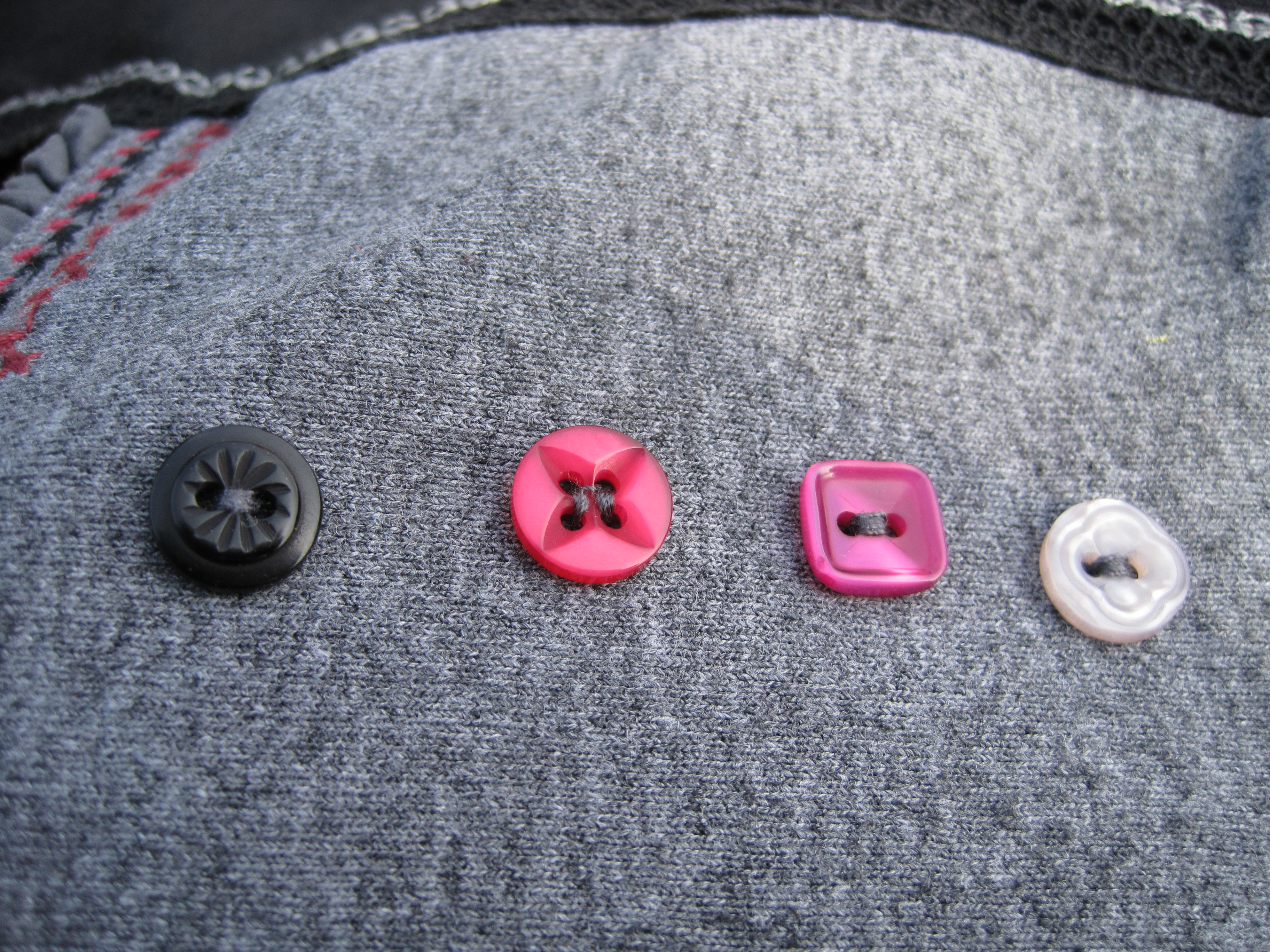
c.  Where I saw nothing Clea saw beauty everywhere – in a T-shirt, in a set of buttons on her mothers top, in the grass:

Lessons Learnt

My already existing, always, way of being is not open to wonder.  It simply is not.  And so I miss the beauty, the wonder, of what is present around me in the simplest things.  If I approached the world, from the context, that my daughter approaches it then I would experience the beauty of the world that she experiences.  I am totally up for that.

I need to start somewhere so I will become an ‘Apprentice in Wonder’ to my Clea by looking at the world through her eyes.  That means giving her a camera so that she can capture what she sees and share that with me.  It also means being open to the new.

I have started a (daily) gratitude journal to enable me to capture one aspect of the wonder/beauty of this world that I simply miss because I do not look for it / am not present to it as I take it for granted.  You can find it here:   http://icanbegratefulfor.wordpress.com/

On being wrong or giving up your point of view


I had, in my opinion, a difficult upbringing.  What got me through it was the conviction that my parents (their beliefs, their culture, their practices) were narrow minded and plain wrong.  And that I was right: more open minded, more tolerant, more widely read etc.

Since that time I have made a life out of being right.  I have read on philosophy, psychology, sociology, neuroscience, history, politics, religion etc.  I have spent three months or so reading a whole collection of works to get to grips with Islam (the religion) so that I could prove my parents to be ignorant and wrong.  And of course I did and it felt great.  Yet, it did not help me to build a bond of mutual respect and affection.

It is interesting, for me, to realise that I ended up in consulting.  What are consultants great at?  Being right: we know what you should do, how you should do it, when you should do it, the right process and tools to use.  Put differently, I have made a living out of being right.  And so it is no surprise that the action that I find the hardest is to “give up my point of view” and accept that my point of view is one amongst many, many points of view: specifically that I am too simple to comprehend the complexity and dynamic nature of life.

Then I came across the following TED talk, which I encourage you to watch and listen to:  On being wrong.   Here are some key quotes:

  • Kathryn Schulz: “This attachment to our own rightness keeps us from preventing mistakes when we absolutely need to, and causes us to treat each other terribly.”
  • St. Augustine: “I err therefore I am.”
  • Buddha = Schulz + Augustine: “Ignorance is the root cause of the cycle of existence and suffering.”

If you have not already done so then I urge you to watch the following TED video on empathy: A radical experiment in empathy”.  I recommend that you first watch “On being wrong” and then watch “A radical experiment on empathy”.  Put differently, if I can accept that I may be wrong then it helps me to get the other – to empathise.

I thank my friend Arie for extracting the following from the TED empathy video:

“Step outside of your tiny little world.

Step inside of the tiny little world of somebody else.

And then do it again, and do it again, and do it again.

And suddently all of these tiny little worlds they come together in this complex web.

And they build a big complex world.

And suddenly without realizing it

you’re seeing the world differently.

Everything has changed.”
To sum it all up

Accepting and standing in the circle that “I could be wrong here, how I perceive and think about stuff is only one way of doing so” is the access to not only wisdom but also to empathy and through that to better relationships, more love and joy in our lives and finally a better world.   Then again, I may have got it totally wrong!


How one simple practice can help build strong relationships


I have been married to the same woman for over 15 years and we have known each other for longer than that.  Over that time we have gone through the roller-coaster of relationship many times: spring, summer, autumn and winter.  There have been times when we have created and bathed in a delightful relationship.  There have been times when the relationship has been simply ok.  And there have been times when it has been so painful that I have wondered how I got myself into the relationship and into that position.

Recently, I have noticed that my relationship, my relating, with my wife has gone up dramatically.  And all because we have incorporated a practice into our lives.  Because it works so well I want to share that with you.   Here is how this practice works:

  • Twice a week, every week, we spend time together and talk about our experience of our relationship.  What is working, what is not working, what can be improved.
  • We are clear that the purpose of these sessions is to build the relationship and not to simply vent. And so any sharing has to be mindful.  Yes, I can share what my wife did (Teh behaviour that occurred), how it landed for me and how it has left me feeling.  No, I do not give myself permission (nor does my wife) to  label, criticise or condemn her.  Why?
  • Because we have agreed that we will listen to each other as persons of worth – each of us being up for building a loving relationship and going about it as best as we can.  And so any behaviour that does not contribute to that is open for discussion but not the worth, the dignity, the motivation of the other.
  • We start by checking in and compliments.  Checking in is simply getting present to where you are at in the relationship. Specifically, are there any issues, grudges, resentment, anger that stands between me and my wife.  Once I have shared this then I get present to what specifically my wife has done that has made my life easier, better or simply enjoyable.  Then I share that with my wife and thank her.   Then she does the same.
  • Next, we take turns to share whatever stands between us – the irritations, the disappointments, the upset, the grudges, the frustrations etc.  And we do that using non-violent language.  In the process, I may find that I have done something that has landed badly for my wife and I had simply been unaware of it.  For example, I may have made a casual remark that hurt my wife’s feelings.  When that happens I tend to be genuinely remorseful and apologise.  That tends to be enough for my wife because she gets that it is genuine.  On the other hand it may be that I am asked to do something that my wife needs me to do.  Or to stop doing something.  We discuss, we understand, we make requests, we come to an agreement.
  • During our talk, our sharing, we have agreed to focus on specific events and behaviour that happened between the last time we talked and this time.  That means that we tend to be talking about stuff that happened in the last three days.  I find that really works for me because I am dealing with specific behaviour rather than generalities and grudges that were born, weeks, months, years ago and have not yet been killed off.

Do each and everyone of these sessions go smoothly?  No.  We have worked out that it is better to rearrange if you are feeling down or simply juggling with so much stuff that you are not in the state of mind to be the kind of person you need to be to honour these sessions and make them work as intended.  Have these sessions helped us to understand each other, to empathise?  Yes.  Have these sessions helped more love enter into our lives?  Absolutely.  Do we listen to each other differently every day?  Yes and that makes all the difference.  It is amazing what can grow when you listen to each other as persons of worth up for and playing the game of lets build a great relationship, a great life.

Here is a link to an interesting talk on TED.  It is all about walking in the shoes of the other and how that builds understanding.  I suspect that is what we are doing through these sessions.

I love to contribute through teaching, education and coaching


This week I got an opportunity to share my enthusiasm and perspective on the field of Customer Experience.  I prepared for it thoroughly and then on the day I just got up and shared my perspective with the natural enthusiasm I have for what I was sharing.  During the event I got to meet people and to learn – both of which I enjoyed.  I believe that I have even made some friends.  Certainly, I have enjoyed hearing that my talk was well received and it made a contribution: the effort was worthwhile!

This whole event reminds me that I have always enjoyed helping others through teaching, education and coaching.

My first memory is that of my friend Thakor asking me to help him with various subjects we studied at school.  I jumped at the chance and shared with him what I knew and helped him to tackle the areas that he was finding difficult.  For his part Thakor taught me to play Chess and had the patience to put up with defeating me 27 times before I won my first game against him!

The second memory is one of sharing my knowledge with a classmate (Andy) at university.  Now the interesting thing is that I did not like Andy – actually he was one of the few that I disliked.  Yet, one of his parents had died in the final year of our degree and he fell to pieces.  So when he asked me for my help, I helped him to the max.  Either he was great and/or my help made a difference because Andy graduated with a first class degree.   And so the story continues.

So the question that comes up is why am I not contributing to my fellow human beings through teaching, education and coaching?  A good question.  Perhaps The Customer Blog that I write is my attempt at doing exactly that.  And perhaps these meditations serve the same purpose when it comes to family and friends.

So my question for you is this: what is it that comes naturally to you, that you love to do, and which you are not doing or not doing as well as you can?

I know that for my son Marco, he is not making people laugh through his impersonations of other people.  It is a gift that he has had since he was little and yet it disappeared for several years.  This evening this gift burst forth and he had his brother and his parents laughing so much that our stomachs hurt.