Giftivism: Transforming Life Through Small Acts of Radical Kindness


I start by gifting you that which shows up for me as a profound truth:

“What we will do for love will always be far more powerful than what we will do for money. What we can do together will always be far greater than what we can do alone.”

– Pavithra Mehta

This wisdom, this truth, this gift found itself to me through coming across and listening to what shows up for me as the most radical-inspiring talk of recent times.

It occurs to me that the being of the speaker and that which the speaker shares is in complete alignment with that which I share in my speaking through this blog. As such I am paying it forward by sharing this profound-radical-inspiring talk with you.

http://youtu.be/p_QLGvp_stI

Here are some words that have caught my attention, may they speak to you and resonate with you. May they act as an opening for you to enter into and lift ‘giftivism’: small acts of radical kindness 

“So in a world where everything has a price — what happens to the priceless?

We live in a time where we have mastered the art of “liking” each other on Facebook but have forgotten the art of loving each other in real life.

Our purpose doesn’t lie in our commodities it lies in our sense of communion …. Compassion. Empathy. Generosity. Trust….

What practices, systems and designs emerge when we believe people WANT to behave selflessly?

Generosity is generative. Everybody wins because generosity is NOT a zero sum game.”

And I leave you with the speakers invitation:

“We begin to move from being a market economy to being part of a gift ecology.

 It begins with small steps. I invite each one of you to think about what your small step will be. What is YOUR giftivist resolution?

May we each take that step. May we change ourselves, may we change the world.”

At your service and with my love

maz


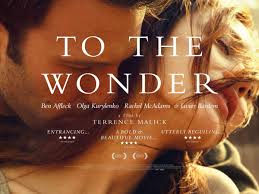
To The Wonder: A Beautiful Meditation On Life, Love, And The Wonder Of Existence?


tothewonder

Yesterday, I found myself watching Terence Malik‘s latest film: To The Wonder.  Terence Malik is not a conventional director, he is a philosopher in the disguise of a film director.  To The Wonder is not a film, it shows up for me as philosophical meditation on life, on love, on God, and on existence itself.  It just so happens that this meditation is communicated through film.

If you find that that which I speak finds a listening in you then I recommend that you make the time  to ‘read’ To The Wonder. And as for any philosophical reading it is necessary to do so when one either creates for finds oneself in the right mood and with the right listening – a listening that allows the speaking to show up as meaningful.

What more is there to say on To The Wonder?  Allow me to share with you snippets of the sayings (on To The Wonder) that speak to me and shed some light.

Every one of us, no matter how damaged or abnormal or shut down, we’re all looking for love. Every person needs love in this world, but our views on what love is vary enormously. Which is the joy and the problem.”

Olga Kurylenko (one of the main characters in the film)

“Why must a film explain everything? Why must every motivation be spelled out? Aren’t many films fundamentally the same film, with only the specifics changed? Aren’t many of them telling the same story? Seeking perfection, we see what our dreams and hopes might look like. We realize they come as a gift through no power of our own, and if we lose them, isn’t that almost worse than never having had them in the first place?”

Roger Ebert (film critic, deceased)

“On a deeper level, the film is Malick’s meditation on the Christian vision of loveand the obstacles that we perversely place in the way of satisfying our irrepressible longing for it. Anyone who’s fallen in love is familiar with the feeling: The world appears transfigured. In the first words of the film, Marina describes it as being “newborn,” called “out of the shadows……..

Ultimately, for Malick, the experience of falling in love grants us a glimpse of the divine — of a “Love that loves us”…… But love is not only rapture. In Malick’s Christian view, it also calls on us to sacrifice, to give ourselves over fully to the one we love…… Father Quintana says it is: “Love is not only a feeling. Love is a duty. You shall love… You feel your love has died? It is perhaps waiting to be transformed into something higher.” 

Father Quintana achieves a spiritual epiphany during a sequence toward the end of the movie that is unlike any I have ever encountered in film……As the priest comforts a succession of suffering people — the old, the anguished, the crippled, the sick, and the dying — he recites a devotion of St. Patrick: “Christ be with me. Christ before me. Christ behind me. Christ in me. Christ beneath me. Christ above me. Christ on my right. Christ on my left. Christ in the heart.”

Humanity was made for God. And he is present all around us — in the transfiguring, wondrous joy of romantic love, in self-giving sacrifice, in our suffering and the suffering of others, in the charity we offer to those in pain, in the resplendent beauty of the natural world — if only we open our eyes to see him. That, it seems, is Terrence Malick’s scandalous message.”

Damon Linker (senior correspondent at theweek.com)

Death As Access to Zestful-Intelligent-Compassionate Living


Death has been with me, a companion, since the day that I came out of this world and into it – the day of my birth.  Since then many years have gone by and friend Death is getting closer – catching up with me. One day, perhaps even today, he will catch up with me, and embrace me.  No second chances, no re-runs, no repeats, no encores. Just this one life – this one opportunity to participate in the melody-play called Life.

Can Death Be An Ally in Mindful-Zestful Living?

Is death necessarily negative?  Or can you/i relate to Death as a friend/ally who can provide access to zestful-intelligent-compassionate-meaningful living?  Let’s listen to Don Juan’s wisdom as shared some time ago by Carlos Castenada:

Without the awareness of death everything is ordinary, trivial. It is only because death is stalking us that the world is an unfathomable mystery……

Death is a wise adviser that we have… One… has to ask death’s advice and drop the cursed pettiness that belongs to men that live their lives as if death will never tap them!

You have little time and no time for crap. A wonderful state! The best of us always comes out when we are against the wall, when we feel the sword dangling overhead. … I wouldn’t have it any other way.”

(The warrior) knows that death is stalking him or her and won’t give time to cling to anything… And thus with an awareness of death,… and with the power of own decisions, the warrior sets life in a strategic manner… and what the warrior chooses is always strategically the best; and thus the warrior performs everything with gusto and lusty efficiency!

What shows up, if i/you are not present to Death and thus do not live strategically? The Top 5 Regrets of the Dying

I say it is worth listening to what Bronnie Ware says on the matter:

“For many years I worked in palliative care. My patients were those who had gone home to die…….

When questioned about any regrets they had or anything they would do differently, common themes surfaced again and again. Here are the most common five:

1. I wish I’d had the courage to live a life true to myself, not the life others expected of me.

Most people had not honoured even a half of their dreams and had to die knowing that it was due to choices they had made, or not made.

2. I wish I didn’t work so hard.

This came from every male patient that I nursed.…….. All of the men I nursed deeply regretted spending so much of their lives on the treadmill of a work existence.

3. I wish I’d had the courage to express my feelings.

Many people suppressed their feelings in order to keep peace with others…. they settled for a mediocre existence …….. Many developed illnesses relating to the bitterness and resentment they carried as a result. 

4. I wish I had stayed in touch with my friends.

Many had become so caught up in their own lives that they had let golden friendships slip by over the years……. Everyone misses their friends when they are dying.

5. I wish that I had let myself be happier.

Many did not realise until the end that happiness is a choice.……Fear of change had them pretending to others, and to their selves, that they were content. When deep within, they longed to laugh properly and have silliness in their life again.

And Finally

Early Friday morning. I did not sleep well; tiredness is present. After sitting in the train for over an hour, the train arrives into London and I get off. It is another ten minutes to the office.  Outside. It is cold, it is blustery, it is darkish, it is raining. Yet I find at peace and joyous. How/why?  I leave you with this quote from Martin Heidegger:

If I take death into my life, acknowledge it, and face it squarely, I will free myself from the anxiety of death and the pettiness of life — and only then will I be free to become myself.

The challenge that remains is to keep this existence. This challenge is made easier every time I look in the mirror and see the face that faces me: the long thick jet black hair is surrendering to the continued advance of the grey.

What Lies Forgotten Behind Language, Ideology and Religion?


“Deliver us, O Allah, from the Sea of Names.”

– Ibn al-Arabi

How to be grateful for being gifted an entrance into 2014?  How to create-live the possibility of being a clearing for kindness, generosity, harmony and aliveness?  Perhaps through some passages that speak to me and get me present to that which lies forgotten behind language, behind ideology, behind my taken for granted way of living.  I share these with you – may one of them will call to you and provide you access to living a ‘richer’ life this year.

Rumi:

“Beyond our ideas of right-doing and wrong-doing,
there is a field. I’ll meet you there.
When the soul lies down in that grass,
the world is too full to talk about.
Ideas, language, even the phrase ‘each other’
doesn’t make sense any more.”

Wendell Berry:

“Thy life’s a miracle. Speak yet again

This is the line that calls Gloucester back – out of hubris, and the damage and despair that invariably follow – into the properly subordinated life of grief and joy, where change and redemption are possible……

One immediately recognises that suicide is not the only way to give up on life …….we can give up on life also by presuming to “understand” it – that is by reducing it to the terms of our understanding and treating it as predictable or mechanical. The most radical influence of reductive science has been virtually the universal adoption of the idea that the world, its creatures, and all the parts of its creatures are machines…..

This may have begun as a metaphor, but in the language as it is used (and as it affects industrial practice) it has evolved from metaphor through equation to identification. And this usage institutionalises the human wish, or sin of wishing, that life might be, or might be made to be, predictable. 

….. whenever one treats living organisms as machines they must necessarily be perceived to behave as such……. Whenever one perceives living organisms as machines they must necessarily treated as such.

…. to reduce life to the scope of our understanding (whatever “model” we use) is inevitably to enslave it, make property of it, and put it up for sale. This is to give up on life, to carry it beyond change and redemption, and to increase the proximity of despair…..”

Ibn al-Arabi: 

“Do not attach yourself to any particular creed exclusively, so that you may disbelieve all the rest; otherwise you will lose much good, nay, you will fail to recognize the real truth of the matter. God, the omnipresent and omnipotent, is not limited by any one creed, for he says, ‘Wheresoever ye turn, there is the face of Allah’ (Koran 2:109). Everyone praises what he believes; his god is his own creature, and in praising it he praises himself. Consequently, he blames the disbelief of others, which he would not do if he were just, but his dislike is based on ignorance.”

It occurs to me that to walk-live the path pointed out by these speakers is to live a transformed life.

Life Is A Miracle, Speak Yet Again: Bring New Light To What Life Might Be


“Thy life is a miracle. Speak yet again.”

– Edgar speaking to the Earl of Gloucester in Shakespeare’s King Lear

Looking Back On 2013

On this the last day of 2013 what is it that I am present to?  Gratitude. What is it that I am grateful for?

How wondrous it is that I can see!  I got to see blue sky, white clouds, yellow sunshine, pinkish sunset….

How magical it is that I can hear!  Today, I found myself listening to my daughter call me “Papa”; I love the sound of “Papa” and have done so ever since my first child called me “Papa”.  Music, I found myself listening and moving to, and being moved by, the music coming through on the tablet.

How wondrous that I can speak! Yes, speak – communicate with my fellow human beings, express myself, ask for help, offer help, co-ordinate my actions with all whom I find myself in a dance with.

How miraculous that I can smell! One of the joys of starting the morning is smelling the various fragrances that go with the various soaps which I use when I shower in the morning.

How wonderful it is to find that everything works – that the fingers work, the arms work, the feet work, the legs work, the back works, the lungs work, the heart works ……….! What a gift is is to find myself fully able to take care of myself such that I do not rely on nor wait for anyone to take care of me?  What a gift it is to dance.

Looking Ahead to 2014

Yes, life is a miracle.  Let’s assume that the miracle continues and I am gifted an entrance into 2014. What is there to “Speak yet again”?  It occurs to me that what there is to speak is to speak a possibility.

“Bring new light to what life might be.” 

This is why you were born; that’s why you are here. To bring some new angle to the human condition – if not to the broader world in general, then at least to your family and the people around you…….

– Hugh MacLeod, Gaping Void

As I sit with “Bring new light to what life might be.” what shows up?  Kindness-Gentleness-Aliveness-Harmony.  It occurs to me that I moved by the possibility of being an opening for kindness-gentleness-harmony to show up in the world. It occurs to me that if I am gifted life in 2014 then I am up for speaking kindness, generosity, aliveness, and harmony in my way of being (showing up) in the world.

What is it that you are moved to speak in 2014? How can you bring new light to what life might be?

I Thank You and Wish You The Very Best for Xmas and 2014


Hello to each and everyone,

This is a personal message from me to you. What is there for me to say to you, at this special time of the year?

THANK YOU. I thank you for subscribing. I thank you for commenting. I thank you for encouraging me in my speaking. I thank you for sharing that which you find worth sharing via Twitter, Facebook, and LinkedIn.

Please know that I am grateful for your listening; it is your listening that continues to call forth my speaking in this blog. Please know that I am grateful that you exist; your existence matters – for one it contributes to my existence.  If you were here and it was OK with you then I would look you in the eyes, say “Thank You!” and give you a hug. That is not the case. So what is it that I can share with you at this special time of the year?  Allow me to share with you an insight which shows up for me as being particularly relevant for this time of the year:

… it became crystal clear to me during the est training that at bottom, people love each other, if they’re given half a chance. Love is that is waiting to emerge when everything that is in the way of love is let go and cleared away….

…. love becomes obvious and present when fear , judgement and separation are dropped…

Because love, finally, in the end, is what everyone is craving. Not to be loved, but to be loving.

– Eliezer Sobel, The 99th Monkey

I thank you for your contribution and I wish you a great Xmas and the very best for 2014.  I wish you a meaningful-fulfilling life, a life full of connection, laughter and love. I invite you to contribute to a world that works for all, none excluded.

At your service / with my love

Maz

Everything That Shows Up Shows Up In Relationship; Everything Said is Said by Someone


In our default way of being in the world, in the West, we ascribe properties to objects. So without any conscious-deliberative thought, we say:

  • This rose is red;
  • This bag is heavy;
  • My husband-wife-partner is selfish;
  • My boss is harsh-selfish-demanding-stupid;
  • My work is boring;
  • The English are cold-unfriendly people;
  • The Americans are arrogant;
  • This food is delicious;
  • She has such an irritating voice ……

Let’s stop and ask ourselves the question, “Is what I take for granted really what is so?”  Let’s just consider the last assertion “She has such an irritating voice!”, as assertion made by a family member when she heard me listening to a podcast.

When I/you say “She has such an irritating voice!” what is it that I am sharing?  Am I pointing out an objective truth? Am I pointing out to the intrinsic ‘suchness’ of her voice?  It looks that way doesn’t it given that is our cultural practice: we stand aside from the world, looking at it as a scientist does, and describe the properties of the world – including the properties of people, of objects, of groups of people and objects. And in so doing we forget that it is i/you/we who are doing the describing!

It occurs to me that when I say “She has such an irritating voice!” I am not speaking an objective truth. Rather, I am pointing at and sharing my lived experience. If I were to describe this lived experience it would be something like this:

“In my state of being right now and the listening that automatically flows from my state of being, I find that her voice shows up as irritating. “

Do you notice the different between these two statements:

“She has such an irritating voice!” and

“In my state of being right now and the listening that automatically flows from my state of being, I find her voice shows up as irritating.”

Do you notice that the label ‘irritating voice’ points towards and highlights the flavour-tone-touch of  my relationship with her?  ‘Irritating voice’ is not a property of her. Her voice is simply her voice: it is neither melodious nor irritating.  Any irritation that shows me in me arises out of my relating with her voice. 

Summing up:

– man is being-in-the-world-with-others and as such always exist in relationship. Everything that shows up shows up in the space of relationship. There are no objects with intrinsic properties independent of others.  

– all descriptions, all labeling, all asserting is done by someone. Humberto Maturna is reported to have said “Everything said is said by someone”.  By this he meant that all acts of cognition-experience occur, are distinguished by, and spoken by someone.  This also means that “All that is heard is heard by someone.” 

– when you and I get that, really get that, then the space of transformation (in our relating to ourself, to others, to the world in which we dwell) opens up and is available for reinterpretation. Whether you and I step into that space is a choice that we can accept or decline.  


Nelson Mandela: A Master of Being?


I am not in a position to say anything about Nelson Mandela. Why? I didn’t know him at all, I simply know of him. What I notice is that a big deal is being made of his death. Why?

It occurs to me that Nelson Mandela embodied a certain way of being. A way of being that is uncommon in our age. What kind of being am I pointing at?   Being a stand for a possibility that speaks to many of us, a possibility that moves-touches-inspires many of us at the very deepest level:

“I think his main legacy will be instilling confidence among all people in South Africa, instilling the knowledge that people are equal, all people regardless of colour; that people can live in peace and harmony and love.”

-Fellow ANC political prisoner Ahmed Kathrada

Looking through is ‘work’ I find myself deeply touched by some of his saying. These I share with you for they may also call to you, touch you, and open up new possibilities and avenues. It occurs to me that if you and I are to generate value from these quotes then we have to live them not just read them.

There is no passion to be found playing small–in settling for a life that is less than the one you are capable of living.”

“It always seems impossible until it’s done.”

“The greatest glory in living lies not in never falling, but in rising every time we fall.”

“One of the things I learned when I was negotiating was that until I changed myself, I could not change others.

Resentment is like drinking poison and then hoping it will kill your enemies.”

“If you want to make peace with your enemy, you have to work with your enemy.”

“There were many dark moments when my faith in humanity was sorely tested, but I would not and could not give myself up to despair. That way lays defeat and death.”

“It is what we make out of what we have, not what we are given, that separates one person from another.”

“What counts in life is not the mere fact that we have lived. It is what difference we have made to the lives of others that will determine the significance of the life we led.

“There is a universal respect and even admiration for those who are humble and simple by nature, and who have absolute confidence in all human beings irrespective of their social status.”

One cannot be prepared for something while secretly believing it will not happen.

“There are few misfortunes in this world that you cannot turn into a personal triumph if you have the iron will and the necessary skill.”

A winner is a dreamer who never gives up

Generating Workability, Unclenching The Grip of Illusion


I create the ‘unworkability’ that is present in my living. I create the misery that is present in my experience of living. I say that you do the same. And it occurs to me that collectively we create the unworkability-misery in our lives, our relationships, our families, our organisations, our communities, our tribes, our societies, our worlds…..

How do i-you-we create this ‘unworkability’?  It occurs me to me that we do so because we confuse-collapse ‘what is’ with what we ‘think it is’ and what we ‘want it to be’.  The real ‘wickedness’ is that you-i-we are not even present to collapsing-confusing ‘what is’ with ‘what we think it is’ and ‘what-how we want it to be’.

Allow me to illustrate our default condition of being-in-the-world by posing a simple question.  I ask you to be with, consider, and answer the following question: what is the sound of silence?

What is the sound of silence? Did you grapple with this question? Did you try out this question? Did you live the question?  Or did you simple find that a judgement-answer showed up for you automatically? Did you find yourself thinking “What a stupid question! Silence is silence, there is no sound!”

You and I are conditioned to approach this question and almost every other question through the avenues of  ‘what everyone knows’, ‘theory’, and/or ‘logic’.  What is the sound of silence?  Approached through the avenue of logic, the answer is there is no sound because logic defines silence as the complete absence of sound.  And common sense, ‘what everyone knows’, takes this for granted – it does not question.

What shows up if you question the taken for granted answer to this question?  What shows up if you live the question? What shows up if you actually put yourself in place where there is silence and listen?

If you live this question, experience it for yourself, you will find that there is a sound to the silence. If you live this long enough, several times, you might just find that the sound of silence can be different in different moments.

It occurs to me that now would be a great time-place to sit with this question: where else have I confused-collapsed ‘what is so’ with ‘what i-we think is so’ and/or ‘what i want to be so’?  It occurs to me that if i-you-we live this question then our lives would open up to new possibilities.  And we would get access to increasing the workability of our lives, our relationships, our organisations, our communities, our world.

Finally, remember that what truly counts (in human life) has to be experienced-created-lived first hand in order for i-you to know it as it truly is.  I want to share with you this quote with you:

“There are certain things you can only know by creating them for yourself.”

– Werner Erhard

Life Isn’t Working Out As I’d Like It To Work Out


Life isn’t working out as I’d like it to work out. The question that I am left with is this one, how to be about what is so?  I have been grappling with this (including some help from Gregory Bateson) and I want to share with you what showed up for me.

Lets imagine that I am at a disco and the DJ is playing all kinds of music: pop, soul, rock, disco, R&B, ska, country, jazz…… etc.  Further, let’s imagine I am at this disco to dance – to just dance. What is my experience if I insist that I will only get up and dance to say R&B music?  Is it not likely that I will spend most of my evening dissatisfied – sat in my chair, being dissatisfied with the music being played, complaining that the DJ has not taste, getting drunk ….

Now imagine that I have two normal dice in my hands. And I roll the dice. What shows up? Any combination: two, three, four, five, six, seven, eight, nine, ten, eleven, or twelve.  Right?  That is simply what is so given the nature of the dice and the game that I am playing.

Given the design of the game, I know that if I play this game or find myself playing this game, I will end up with one of eleven outcomes. I know this beforehand. Yet, I cannot know nor determine what I will end up getting when I roll the dice.  Nor can I know what will show up if someone else rolls the dice for me.

two-dice-one-red-and-one-black-landed-on-double-six

What happens to my experience of living if I make my self-expression, happiness, aliveness, fulfilment, conditional on getting two sixes every time I throw the dice?

Have I not limited myself to being happy-fulfilled, on average, once every 11 throws of the dice? Have I not, at the very same time, condemned myself to the experience of dissatisfaction even misery for the other ten throws?  Have I not stacked the odds against myself?

What happens if I put myself in a position (through being and doing) where I am as expressed, as happy, as alive, as fulfilled, if I get an eleven as well as a twelve?  It occurs to me that I have doubled the occasions for experiencing being alive, being self-expressed, being happy, being fulfilled.

Now imagine that I have arrived at a place where I am ok with whatever the roll of the dice generates.  What is my experience of living in this case?  Is my experience not transformed?

Knowing this, I have a choice in the matter of how I choose to show up, live and thus experience my life.  I can choose to:

  • dance with whatever shows up and in dancing I can became a better dancer;
  • act on others and the world to get them to conform to my wishes – each and every day; and/or
  • resign myself to being self-expressed, alive, happy and fulfilled when life shows up exactly as I insist that it shows up.

What Does It Take For Me To Understand You?


Let’s explore understanding. Let’s make this specific and explore what it takes for me to understand you.

The default: I understand you conceptually and instrumentally

It occurs to me that the default way of understanding is cognitive-conceptual-detached. Put more plainly, it is head stuff.  This is the kind of understanding that I am after when I ask, “Why did you do that?” This is the kind of understanding that leaves me feeling safe-satisfied when I have placed you into an existing category. A great example of this is Myers-Briggs typologies. This is the kind of understanding that shows up when I stand facing you, observing you. You and I are distant standing in different places. It is akin to the understanding that the scientist generates in the laboratory: the observer and the observed.

Having gone about understanding you in this manner, in what sense have I understood you?  Perhaps, a more insightful-pentrating question is this one, have I understood you at all? I assert that I have not understood you.  Now this would not be an issue (in the workability of my life, your life, our relationship) if I got (and you got) that this default mode of understanding you, leaves me not understanding you.  Yet, in life as lived, it does show up as an issue because I do NOT get that I can never understand you if I use this default mode of understanding you.

At best I understand you instrumentally.  Which is to say that I understand you like understanding a car – good enough to drive it. Understanding you instrumentally allows me to get along with you. And make use of you.

What does it take for me to really understand you?

Does understanding you require me to ‘walk in your shoes’? No, because I am not you and you are not me. Even if I walk in your shoes it is highly unlikely that that the world will show up for me as it shows up for you, and that I will experience that which you experience.

I say that it takes a certain kind of context for me to understand you.  What kind of context?  A context where you feel safe opening up and sharing yourself with me.  How do I generate that context? By showing up and relating-listening to you as a fellow human being who is whole-complete-perfect. It occurs to me that Carl Rogers called this ‘unconditional positive regard‘.  Whilst this is necessary, it is not enough.  Generous listening, deep curiosity, sufficient time, and patience are also required.

What kind of questions open up a space for me to understand you?  

It occurs to me that the following questions are pointers towards the right kind of questions:

  • How does this person-event-situation-world show up for you?  And how would you like it to show up for you?
  • How do you show up for yourself? And how would you like to show up for yourself?
  • What exactly is your experience (bodily sensations, moods, feelings, thoughts …..) of your life, your living? And what would you like your experience to be?
  • What kind of a future are you living into? How does the future show up for you?
  • What kind of future would you like to be living into?  What will it take for you to generate this future?
  • What are your dreams? What would you take on if money was no object, if you had absolute confidence in yourself?  Who would travel this path, take on this challenge with you?
  • What are you struggling with right now? How are you experiencing this struggle? Who is helping you face these struggles?
  • Which events-activities-persons in your life leave you most satisfied-fulfilled?
  • What message would you like your living to speak?
  • What legacy would you like to leave? For who?
  • What/who are you grateful for?

And finally

In being present to these questions, I get, vividly-experientially, that I do NOT understand you.  Being thus present, not deluded, I can choose to walk the path of genuine understanding or not.

So what does it take for me to understand you?  It takes genuine caring. It takes genuine-deep curiosity. It takes time and it takes effort. It takes giving me the notion that I already understand you. It takes giving me the notion that you are a static object – once understood, always understood. It takes a certain kind of generosity of being.

Why should I make the effort to generate this kind of understanding?  Connection. The access to genuine connection to you, is through this latter type of understanding.

The Power of Life Sentences And How to Break Free


In this post, I continue sharing more insights and distinctions from Lynne Twist in her book The Soul of Money. Having shared the three toxic myths, Lynne goes on to say:

“Life Sentences” Limit Our Possibilities

In any culture, myths communicate moral lessons, and scarcity myths have produced a legacy of beliefs –  “life sentences” – that we embrace as folk wisdom or personal truth”

Let’s explore the distinction “life sentence”

Are you wondering what Lynne is pointing at here? Consider the human species. Consider, that one can carve up the human species into “male” and “female”.  That is simple what is so: some members of the human species are male and others are female. Now ask yourself what it is to be “masculine” and/or “feminine”.

Consider, that what constitutes being (showing up as) “masculine” and “feminine” differs from one culture to another, and from one epoch to another.  What our culture gives as “masculine” and “feminine” rules some ways of being in and others out. To be masculine in the USA is to be a specific way. To be feminine in the USA is to be a specific way. That is the sentence imposed by the American culture on all those who are born and/or live into-within that culture.

Consider, that this life sentences shapes how young children – male and female – are brought up and shaped: by their parents, by their family, by their teachers, by their friends, by the media and eventually by themselves. Which explains the acute discomfort and vulnerability experienced by those who do not live up to this life sentence. Consider, for example, what it takes to openly show up as homosexual in the American workplace.

Perhaps the best pithy example of a life sentence is illustrated by Lynne Twist:

When I was a child my grandmother used to say ….. “Marry the money and love will come later.” We used to laugh ……… to tell the truth, she believed it……. When she married around 1990, she married the wealthiest man she could find and then found a way to love him.

Let’s get present to the power of life sentences

Think about the taken for granted cultural practice of foot binding in China. The impact of this life sentence was not limited to just severely deformed feet. This is what I found on the internet:

The binding of feet was said to be an indicator of Chinese class and a symbol of beauty, but through time, ended up becoming a tradition, lasting over a thousand years and affecting all women in every society leading to one billion women having their feet bound. It was a custom that controlled every woman’s lifestyle. Trying to find a husband for those whose feet were left unbound was virtually impossible.

I’d like to get back to Lynne Twist and The Soul of Money:

I have struggled to understand the tragedy of hunger. Hunger isn’t some mysterious disease…… We know what to do when a child is hungry. We know what a starving person needs. They need food…..

The world is awash in food. We currently have more food on earth than we need to feed everyone several times over. Waste abounds. In several countries……farmers are paid not to grow food….

I saw that the cause of chronic hunger wasn’t just the absence of food. What causes hunger and starvation is something more fundamental than that …..

When I considered the underlying beliefs held in common by almost everyone everywhere …… I saw that there were fundamental assumptions that disabled almost every effort to solve the problem….

When we believe that there is not enough, that resources are scarce, then we accept some will have what they need and some will not. We rationalise that someone is destined to end up with the short end of the stick.

When we believe that more is better, and equate having more with being more – more smart or more able – then people on the short end of the resource stick are assumed to be less smart, less able, even less valuable as human beings. We feel we have permission to discount them.

When we believe that’s just the way things are then we assume the posture of helplessness..…….. We accept that in our human family neither the resource rich members nor the resource poor members have enough money, enough food, or enough intelligence or resourcefulness to generate lasting solutions….

In every situation ….. uncovering the lie and the myths of scarcity has been the first and most powerful step in the transformation from helplessness and resignation to possibility and self reliance. 

How to Break Free From The Life Sentences That Limit Our Possibilities

It occurs to me that the first step is to be aware that our way of being, showing up in the world, is shaped by life sentences. The second step is to question: question the taken for granted beliefs, customs-practices, and assumptions. Third, choose to conform or not with your eyes wide open.

Here is something to consider especially if you live in a so called individualistic country. Are you ready? Whilst you are convinced that your are an individual and that you live in an individualistic society, consider that your culture has already determined what it is to be an individual. That is to say to be a true individual one needs to break free of the life sentence pronounced by your culture.  Stated bluntly, rare is the person who is truly an individual. Most individuals simply fit into the given mould of individual by their culture.

The Myth of Scarcity: That’s Just The Way It Is


Some time ago I started sharing some of that which spoke to me and showed up as worth sharing with you from Lynne Twist’s book: The Soul of Money. As it has been a little while since I last wrote, it may be worth revisiting the first two posts in this conversation:

The Myth of Scarcity: There’s Not Enough

The Myth of Scarcity: More Is Better

Ok, let’s listen to Lynne speak-share the third toxic myth that constitutes an important underpinning for the myth of scarcity. 

Toxic Myth 3: That’s Just The Way It Is

“….. that’s just the way it is, and there’s no way out. There’s not enough to go around, more is definitely better, and the people who have more are always people other than us. It’s not fair but we’d better play the game because that’s just the way it is and it’s hopeless, helpless, unequal, unfair world where you can never get out of this trap.

That’s just the way it is is just another myth, but it’s probably the one with the most grip, because you can always make a case for it. When something has always been a certain way,  and traditions, assumptions, or habits make it resistant to change then it seems logical …. that the way it is is the way it will stay. This is when the blindness, the numbness, the trance, and, underneath it all, the resignation of scarcity sets in. Resignation makes us feel hopeless, helpless, and cynical. Resignation also keeps us in line……. Resignation keeps us from questioning how much we’ll compromise ourselves or exploit others for the money available to us in a job, or career, a personal relationship or a business opportunity. 

That’s just the way it is justifies the greed, the prejudice and inaction that scarcity fosters in our relationship with money and the rest of the human race……

We say we feel bad about these and other inequities in the world, but the problems seem so deeply rooted as to be insurmountable and we resign ourselves to that’s just the way it is, declaring ourselves helpless to change things. In that resignation, we abandon our human potential, and the possibility of contributing to a thriving, equitable, healthy world……

We have to be willing to let go of that’s just the way it is, even if just for a moment, to consider the possibility that there isn’t a way it is or a way it isn’t. There’s the way we choose to act and what we choose to make or our circumstance.”

In my next post, I will continue this conversation and share with you how the possibilities open to us are shaped and closed off by the life sentences imposed on us – by our cultural practices and by us.

And finally

Before I end this conversation, I pose a question or two for us to consider:

  • granted that it is the way it is and it’s not the way it’s not, who/what caused it be the way it is and the way it’s not? 
  • has it always been the way it is and is no right now – across time, across cultures? And if it has not been as it is and is not right now, then who/what caused the shifts in the way that it is and is not?  
  • what would show up in my living, your living, our living if I/you showed up from the stand that “I have a say in the way that it is and is not, the way it will be and not be.”?


The Myth of Scarcity: More Is Better


Today, I am continuing on from the last post where I started this conversation on scarcity and shared Lynne Twist speaking as spoken in The Soul Money.

“Toxic Myth 2: More Is Better

The second toxic myth is that more is better. More of anything is better than what we have. It’s the logical response if you fear that there is not enough, but more is better drives a competitive culture of accumulation, acquisition and greed that only heightens fear and quickens the pace of the race……..

In truth, the rush for more distances us from experiencing the deeper value of what we acquire or already have.”

Let’s just consider food. When was the last time you and I actually were present with the food that we were eating? Did you an I really notice-appreciate the texture-taste of the food and the movement of the mouth and teeth? I have fasted for the last month. And I can say that during this month I appreciated ALL that I ate and drank. And that was so totally  different to my experience when I was eating and drinking whatever I wanted when I wanted it.

Let’s continue to listen to Lynne as she talks about the toxic myth of more is better:

“More is better distracts us from living more mindfully and richly with what we have.

More is better is a chase with no end and a race without winners…… no matter how far you go, or how fast, or how many other people you pass up, you can’t win. In the mindset of scarcity even too much is not enough……Some of the people with fortunes enough to last three lifetimes spend their days and nights worrying about losing money on the stock market, about being ripped off or conned or not having enough for their retirement.

The chase of more is better ……. saps our energy, erodes our opportunities for fulfilment. When we buy into the promise that more is better, we can never arrive. Wherever we are, it is never enough because more is always better. People who follow that credo…….which is all of us to some degree, are doomed to life that is never fulfilled.

More is better misguides us in a deeper way. It leads us to define ourselves by our financial success and external achievements. We judge others based on what they have and how much they have, and miss the immeasurable inner gifts they bring to life……….In the pursuit of more we overlook the fullness and completeness that are already within us waiting to be discovered. 

The belief that we need to possess, and possess more than the other person or company or nation, is the driving force for much of the violence and war, corruption and exploitation on Earth.

The unquestioned, unchecked drive for more fuels an unsustainable economy, culture, and way of being that has failed us by blocking access to the deeper, more meaningful aspects of our lives and ourselves.”

In the next post, I will share with you Lynne’s third and final toxic myth. She says that this third myth is the one with most grip and it occurs to me that she is correct. Until then be great.

The Myth of Scarcity: There’s Not Enough


Today, I share with you passages from The Soul of Money, a book from Lynne Twist. Why? Because in it she discloses and deals with three particularly important myths that live us. That constrains the possibilities we see and limit our expression, way of being.  I invite you to listen freshly and deeply. Let’s begin.

What I have found is that no matter where we are in the political, economic, or financial spectrum, the myths and mindset of scarcity create an underlying fear …..

The mindset of scarcity is not something that we intentionally created …….. It was here before us .……. perpetuated in the myths and language of our money culture.

Scarcity is a lie, but it has been passed down as truth with a powerful that insists on itself, demands compliance, discourages doubt or questioning.

When we unpack the myth of scarcity, we find three central myths …..

Toxic Myth 1: There’s Not Enough

The first prevailing myth is that there’s not enough. There’s not enough to go around. Everyone can’t make it. Somebody’s going to be left out……..There’s not enough food…..money…..air….time…..money.

There’s not enough becomes the reason we do the work that brings us down or the reason we do things to each other that we are not proud of. There’s not enough generates a fear that drives us to make sure that we’re not the person……who gets crushed, marginalised, or left out.

Once we define our world as deficient, the total of our life energy, everything we think, everything we say, and everything we do…….becomes an expression of an effort to overcome this sense of lack and the fear of losing to others and being left out……

If there’s not enough for everyone, then taking care of yourself and your own, even at others’ expense, seems unfortunate, but unavoidable and somehow valid…….

The deficiency and fear reflect in the way that we conduct our lives and the systems and institutions we create to control access to any resource we perceive as valuable or limited. ….

In our own communities, we respond to the fear that there’s not enough by creating systems that favour us or exclude others from access to basic resources such as clean water, good schools, adequate health care, or safe housing.

And in our own families, there’s not enough drives us to buy more than we need……of somethings, to value, favour, or curry favour with people on the basis of their value to us in relation to money, rather than qualities of character.

I ask you to take a moment and really connect with Lynne’s speaking. How is the myth of scarcity and in particular, there’s not enough, constraining who you are being, the stand that you take, what you do or do not do, what you have or do not have?

I ask you to consider if ‘stuff’ is scarce or is it that we make it scarce?  I ask you to consider why many people in the USA cannot get adequate healthcare, yet people in France get great healthcare. I ask you to consider why it is that we let millions thirst, starve and die. Is it because we lack the means? Or is it that we simply take it for granted that there’s not enough for everyone? So it is perfectly logical, and OK, to let millions suffer and die.

I will share with you the second toxic myth in a follow up post. Until then I invite you to invite abundance into your being. I invite you to show up from the context of abundance. How about starting out with an abundance of listening, validation and connection. Just listen, really listen to the people that you encounter every day. Listen consciously from a context of curiosity, of wonder, of connecting with the other person. And through your unconditional listening simply validate that person just as he is and is not. If you do that I guarantee that you generate connection and let happiness into your life. I invite you to take me up on my guarantee.

And finally, Gautam, I hear you.

Awaken: It’s Never Too Soon!


Stop bullshitting!

Kathleen Taylor finishes here TEDx talk with the following exhortation:

Discover and express your amazing uniqueness in the world. Stop bullshitting

Why does Kathleen say this? Because she has learned from spending time working with-counselling the dying.

What can we learn from Kathleen?

Dying people teach us that it is never too late to shed what’s false and to become who we truly are.

Do you and I have to wait until our last days to live authentically?

But I’d like to hope that it is never too soon… So here is the challenge …. let’s don’t wait until we are at the end of our lives to find out who we really are.

Have your ever found yourself thinking about the purpose of your life? Wrong Question!

Have you every been confronted with this question: “What is my life about? What am I supposed to be doing with my life?” This question is one that I continue to grapple with. And this is what Kathleen has good news for me:

I think that is the wrong question.

I actually think the better question is “Who am I being with my life?”

What is the relationship between being and doing?

There is an intersect between doing and being. But, I’m pretty sure that being comes first.

And what you are supposed to be doing with your life will flow from who you truly are. You really can’t screw that up if you do it that way.

Why bother with living authentically? Why not just fit in and go with the flow?

Action, and creativity, and innovation that comes from true authenticity is what moves the world forward. And it has the lovely side effect …. of creating joy.

Awaken to the preciousness of time! be authentic, stop bullshitting

Living is the process of dying. Please read that again: living is the process of dying. This is what you and I are almost never present to. Yet, this is not true for those who are dying:

It ends up that some of the purpose of facing your mortality is to look back on the body of work of your life and develop a deep sense of self. And really, to finally awaken to the preciousness of time.

This brings us back to Kathleen’s exhortation:

Discover and express your amazing uniqueness in the world. Stop bullshitting

Here is Kathleen’s TEDx talk

By now you may be in a place where you actually want to see-hear-experience Kathleen’s TEDx talk. Here it is, enjoy!

With Love or Without Love?


I want to share with you two distinctions ‘with love’ and ‘without love’.  Why am I sharing these distinctions? Because distinctions shed light on what is so and at the same time open doorways to new possibilities.

Today, it occurred to me that everything that you and I do, is done either ‘with love’ or ‘without love’.  And there is a profound difference between doing something ‘with love’ or ‘without love’.

When I listen, am I listening ‘with love’ or am I listening to you ‘without love’?

When I speak, am I speaking with love or without love?

When I write, am I writing with love or without love?

When I cook, am I cooking with love or without love?

When I serve the food that I have cooked, am I serving it with love or without love?

When I eat, am I eating with love or without love?

When I clean the house, am I cleaning with love or without love?

When I turn up to collect my children from school, am I turning up with love or without love?

When I help you with something, am I helping you with love or without love?

When I walk, am I walking with love or without love?

When I sit, am I sitting with love or without love?

When I sleep, am I sleeping with love or without love?

When I work, am I working with love or am I working without love?

It occurs to me that the default is ‘without love’.  It is so much the default that I don’t see that I act ‘without love’. My acting just shows up as acting: I do that which I do as I have always done it. And I think no more of it. I do what I do mindlessly. Yet, the person on the receiving end does notice whether the action was taken with love or without love. When I act with love the other tends to feel accepted-appreciated-loved and I also experience joy. When I act without love, the other is left feeling that s/he does not matter.

I invite you to imagine what your experience of living would be like if you listened with love, spoke with love, and took action with love. What would show up if you brought love to all that you do?

Today, I am inventing the possibility of listening-speaking-acting ‘with love’. I invite you to join me.


Which Context is Determining How You (and I) Show Up?


I share with you a talk worth listening to again and again.  If you are a Landmark graduate then this talk may show up as  welcome reminder of some fundamentals. If you are not a Landmark graduate then you are in for a mind opening talk. Enjoy.

David Foster Wallace: The Powerful Truth of Human Life?


One of the most insightful talks on the human condition is a speech “This is Water” given by David Foster Wallace in 2005.  Having read and listened to it, it occurs to me that David Foster Wallace got life in a way that few of us do.  And as such I share this short video of his talk with you.


Here is an adaptation of the speech that he gave courtesy of Shane Parrish:

A huge percentage of the stuff that I tend to be automatically certain of is, it turns out, totally wrong and deluded. Here’s one example of the utter wrongness of something I tend to be automatically sure of: Everything in my own immediate experience supports my deep belief that I am the absolute center of the universe, the realest, most vivid and important person in existence. We rarely talk about this sort of natural, basic self-centeredness, because it’s so socially repulsive, but it’s pretty much the same for all of us, deep down. It is our default-setting, hard-wired into our boards at birth. Think about it: There is no experience you’ve had that you were not at the absolute center of. The world as you experience it is right there in front of you, or behind you, to the left or right of you, on your TV, or your monitor, or whatever. Other people’s thoughts and feelings have to be communicated to you somehow, but your own are so immediate, urgent, real — you get the idea. But please don’t worry that I’m getting ready to preach to you about compassion or other-directedness or the so-called “virtues.” This is not a matter of virtue — it’s a matter of my choosing to do the work of somehow altering or getting free of my natural, hard-wired default-setting, which is to be deeply and literally self-centered, and to see and interpret everything through this lens of self.

People who can adjust their natural default-setting this way are often described as being “well adjusted,” which I suggest to you is not an accidental term.

Given the triumphal academic setting here, an obvious question is how much of this work of adjusting our default-setting involves actual knowledge or intellect. This question gets tricky. Probably the most dangerous thing about college education, at least in my own case, is that it enables my tendency to over-intellectualize stuff, to get lost in abstract arguments inside my head instead of simply paying attention to what’s going on right in front of me. Paying attention to what’s going on inside me. As I’m sure you guys know by now, it is extremely difficult to stay alert and attentive instead of getting hypnotized by the constant monologue inside your own head. Twenty years after my own graduation, I have come gradually to understand that the liberal-arts cliché about “teaching you how to think” is actually shorthand for a much deeper, more serious idea: “Learning how to think” really means learning how to exercise some control over how and what you think. It means being conscious and aware enough to choose what you pay attention to and to choose how you construct meaning from experience. Because if you cannot exercise this kind of choice in adult life, you will be totally hosed. Think of the old cliché about “the mind being an excellent servant but a terrible master.” This, like many clichés, so lame and unexciting on the surface, actually expresses a great and terrible truth. It is not the least bit coincidental that adults who commit suicide with firearms almost always shoot themselves in the head. And the truth is that most of these suicides are actually dead long before they pull the trigger. And I submit that this is what the real, no-bull- value of your liberal-arts education is supposed to be about: How to keep from going through your comfortable, prosperous, respectable adult life dead, unconscious, a slave to your head and to your natural default-setting of being uniquely, completely, imperially alone, day in and day out.

That may sound like hyperbole, or abstract nonsense. So let’s get concrete. The plain fact is that you graduating seniors do not yet have any clue what “day in, day out” really means. There happen to be whole large parts of adult American life that nobody talks about in commencement speeches. One such part involves boredom, routine, and petty frustration. The parents and older folks here will know all too well what I’m talking about.

By way of example, let’s say it’s an average day, and you get up in the morning, go to your challenging job, and you work hard for nine or ten hours, and at the end of the day you’re tired, and you’re stressed out, and all you want is to go home and have a good supper and maybe unwind for a couple of hours and then hit the rack early because you have to get up the next day and do it all again. But then you remember there’s no food at home — you haven’t had time to shop this week, because of your challenging job — and so now after work you have to get in your car and drive to the supermarket. It’s the end of the workday, and the traffic’s very bad, so getting to the store takes way longer than it should, and when you finally get there the supermarket is very crowded, because of course it’s the time of day when all the other people with jobs also try to squeeze in some grocery shopping, and the store’s hideously, fluorescently lit, and infused with soul-killing Muzak or corporate pop, and it’s pretty much the last place you want to be, but you can’t just get in and quickly out: You have to wander all over the huge, overlit store’s crowded aisles to find the stuff you want, and you have to maneuver your junky cart through all these other tired, hurried people with carts, and of course there are also the glacially slow old people and the spacey people and the ADHD kids who all block the aisle and you have to grit your teeth and try to be polite as you ask them to let you by, and eventually, finally, you get all your supper supplies, except now it turns out there aren’t enough checkout lanes open even though it’s the end-of-the-day-rush, so the checkout line is incredibly long, which is stupid and infuriating, but you can’t take your fury out on the frantic lady working the register.

Anyway, you finally get to the checkout line’s front, and pay for your food, and wait to get your check or card authenticated by a machine, and then get told to “Have a nice day” in a voice that is the absolute voice of death, and then you have to take your creepy flimsy plastic bags of groceries in your cart through the crowded, bumpy, littery parking lot, and try to load the bags in your car in such a way that everything doesn’t fall out of the bags and roll around in the trunk on the way home, and then you have to drive all the way home through slow, heavy, SUV-intensive rush-hour traffic, etcetera, etcetera.

The point is that petty, frustrating crap like this is exactly where the work of choosing comes in. Because the traffic jams and crowded aisles and long checkout lines give me time to think, and if I don’t make a conscious decision about how to think and what to pay attention to, I’m going to be pissed and miserable every time I have to food-shop, because my natural default-setting is the certainty that situations like this are really all about me, about my hungriness and my fatigue and my desire to just get home, and it’s going to seem, for all the world, like everybody else is just in my way, and who are all these people in my way? And look at how repulsive most of them are and how stupid and cow-like and dead-eyed and nonhuman they seem here in the checkout line, or at how annoying and rude it is that people are talking loudly on cell phones in the middle of the line, and look at how deeply unfair this is: I’ve worked really hard all day and I’m starved and tired and I can’t even get home to eat and unwind because of all these stupid g-d- people.

Or, of course, if I’m in a more socially conscious form of my default-setting, I can spend time in the end-of-the-day traffic jam being angry and disgusted at all the huge, stupid, lane-blocking SUV’s and Hummers and V-12 pickup trucks burning their wasteful, selfish, forty-gallon tanks of gas, and I can dwell on the fact that the patriotic or religious bumper stickers always seem to be on the biggest, most disgustingly selfish vehicles driven by the ugliest, most inconsiderate and aggressive drivers, who are usually talking on cell phones as they cut people off in order to get just twenty stupid feet ahead in a traffic jam, and I can think about how our children’s children will despise us for wasting all the future’s fuel and probably screwing up the climate, and how spoiled and stupid and disgusting we all are, and how it all just sucks, and so on and so forth…

Look, if I choose to think this way, fine, lots of us do — except that thinking this way tends to be so easy and automatic it doesn’t have to be a choice. Thinking this way is my natural default-setting. It’s the automatic, unconscious way that I experience the boring, frustrating, crowded parts of adult life when I’m operating on the automatic, unconscious belief that I am the center of the world and that my immediate needs and feelings are what should determine the world’s priorities. The thing is that there are obviously different ways to think about these kinds of situations. In this traffic, all these vehicles stuck and idling in my way: It’s not impossible that some of these people in SUV’s have been in horrible auto accidents in the past and now find driving so traumatic that their therapist has all but ordered them to get a huge, heavy SUV so they can feel safe enough to drive; or that the Hummer that just cut me off is maybe being driven by a father whose little child is hurt or sick in the seat next to him, and he’s trying to rush to the hospital, and he’s in a way bigger, more legitimate hurry than I am — it is actually I who am in his way. Or I can choose to force myself to consider the likelihood that everyone else in the supermarket’s checkout line is just as bored and frustrated as I am, and that some of these people probably have much harder, more tedious or painful lives than I do, overall.

Again, please don’t think that I’m giving you moral advice, or that I’m saying you’re “supposed to” think this way, or that anyone expects you to just automatically do it, because it’s hard, it takes will and mental effort, and if you’re like me, some days you won’t be able to do it, or you just flat-out won’t want to. But most days, if you’re aware enough to give yourself a choice, you can choose to look differently at this fat, dead-eyed, over-made-lady who just screamed at her little child in the checkout line — maybe she’s not usually like this; maybe she’s been up three straight nights holding the hand of her husband who’s dying of bone cancer, or maybe this very lady is the low-wage clerk at the Motor Vehicles Dept. who just yesterday helped your spouse resolve a nightmarish red-tape problem through some small act of bureaucratic kindness. Of course, none of this is likely, but it’s also not impossible — it just depends on what you want to consider. If you’re automatically sure that you know what reality is and who and what is really important — if you want to operate on your default-setting — then you, like me, will not consider possibilities that aren’t pointless and annoying. But if you’ve really learned how to think, how to pay attention, then you will know you have other options. It will actually be within your power to experience a crowded, loud, slow, consumer-hell-type situation as not only meaningful but sacred, on fire with the same force that lit the stars — compassion, love, the sub-surface unity of all things. Not that that mystical stuff’s necessarily true: The only thing that’s capital-T True is that you get to decide how you’re going to try to see it. You get to consciously decide what has meaning and what doesn’t. You get to decide what to worship…

Because here’s something else that’s true. In the day-to-day trenches of adult life, there is actually no such thing as atheism. There is no such thing as not worshipping. Everybody worships. The only choice we get is what to worship. And an outstanding reason for choosing some sort of God or spiritual-type thing to worship — be it J.C. or Allah, be it Yahweh or the Wiccan mother-goddess or the Four Noble Truths or some infrangible set of ethical principles — is that pretty much anything else you worship will eat you alive. If you worship money and things — if they are where you tap real meaning in life — then you will never have enough. Never feel you have enough. It’s the truth. Worship your own body and beauty and sexual allure and you will always feel ugly, and when time and age start showing, you will die a million deaths before they finally plant you. On one level, we all know this stuff already — it’s been codified as myths, proverbs, clichés, bromides, epigrams, parables: the skeleton of every great story. The trick is keeping the truth up-front in daily consciousness. Worship power — you will feel weak and afraid, and you will need ever more power over others to keep the fear at bay. Worship your intellect, being seen as smart — you will end up feeling stupid, a fraud, always on the verge of being found out. And so on.

Look, the insidious thing about these forms of worship is not that they’re evil or sinful; it is that they are unconscious. They are default-settings. They’re the kind of worship you just gradually slip into, day after day, getting more and more selective about what you see and how you measure value without ever being fully aware that that’s what you’re doing. And the world will not discourage you from operating on your default-settings, because the world of men and money and power hums along quite nicely on the fuel of fear and contempt and frustration and craving and the worship of self. Our own present culture has harnessed these forces in ways that have yielded extraordinary wealth and comfort and personal freedom. The freedom to be lords of our own tiny skull-sized kingdoms, alone at the center of all creation. This kind of freedom has much to recommend it. But of course there are all different kinds of freedom, and the kind that is most precious you will not hear much talked about in the great outside world of winning and achieving and displaying. The really important kind of freedom involves attention, and awareness, and discipline, and effort, and being able truly to care about other people and to sacrifice for them, over and over, in myriad petty little unsexy ways, every day. That is real freedom. The alternative is unconsciousness, the default-setting, the “rat race” — the constant gnawing sense of having had and lost some infinite thing.

I know that this stuff probably doesn’t sound fun and breezy or grandly inspirational. What it is, so far as I can see, is the truth with a whole lot of rhetorical bullshit pared away. Obviously, you can think of it whatever you wish. But please don’t dismiss it as some finger-wagging Dr. Laura sermon. None of this is about morality, or religion, or dogma, or big fancy questions of life after death. The capital-T Truth is about life before death. It is about making it to 30, or maybe 50, without wanting to shoot yourself in the head. It is about simple awareness — awareness of what is so real and essential, so hidden in plain sight all around us, that we have to keep reminding ourselves, over and over: “This is water, this is water.”

It is unimaginably hard to do this, to stay conscious and alive, day in and day out.

Planting The Seeds of Kindness


“There is too much anger, and distrust, and fear out there. I’d like the world to be a better place..” Thomas Weller

Sometimes one person who takes action is more inspiring than thousands of sermons or a library of books.  With that in mind I wish to share this short video with you.